
Rail Track Maintenance is a core concept of transportation over land. Cost efficiency, high capacity, reliability, sustainability, and safety are just a few advantages of railway transportation. Their unique features also make them the best option for mining and ore transportation. This is why, up to 2025, about 9% of total freight transportation in the world is performed by rail networks. However, an insignificant issue in the railway infrastructure can easily disrupt its function, reduce its safety, and even incur intensive costs.
Therefore, we come to the importance of railway track maintenance and the role it plays in this industry. Whether the rail tracks are defective or not, maintenance is required in order to ensure their safety, reliability, and efficiency. In this blog post, we discuss rail track maintenance and its various types in more detail.
Why Track Maintenance Is Necessary?

Rail track maintenance is essential to ensure the safety, reliability, and efficiency of railway infrastructure. Affected by mechanical, environmental, and operational factors, rail tracks are defective over time. The high speed, vibrations, and heavy loads of rolling stocks can gradually distort or erode different components of tracks, such as gauges, the surface level of rails, and sleepers. On the other hand, they can deteriorate due to weathering factors like rain, icing, sun, etc. These defects, even the smallest ones, yield significant issues in rail networks that disrupt their operations, reliability, and safety.
Railway track maintenance is a set of activities that prevent these issues from occurring. Accordingly, the lifespan of rail tracks is extended, and railway operations and transportation have become safer and more enhanced. Moreover, repairing rail track defects and issues involves extensive cost, and rail track maintenance can significantly reduce it. But there is a question: what rail track maintenance activities are performed regarding this matter? Depending on the railway‘s requirements, activities such as rail grinding, ballast regulating, ballast tamping, and track replacement can be deployed. These activities are explained in more detail in the following:
4 Main Rail Track Maintenance Activities
Rail track maintenance activities are essential for ensuring the safety, durability, and performance of railway infrastructure. However, here are the most common activities carried out to extend the lifespan of tracks and minimize the repair costs:
Rail Track Inspection and Measurement
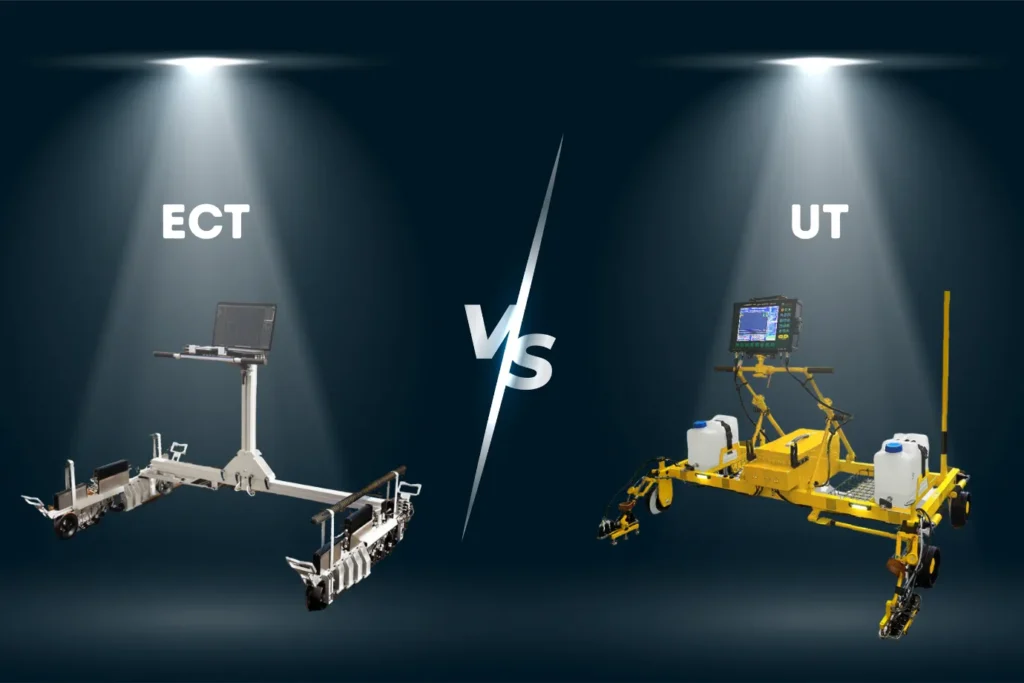
Railway measurement and inspection can be performed in different methods. Today, most of these methods rely on non-destructive testing. The railway operators and specialists inspect the rail tracks through visual testing in cases where the flaws are recognizable with the naked eye. But more advanced methods and railway track maintenance equipment are required to inspect the unrecognizable and hidden flaws in the rail track material and structure. The measurement and inspection process differ based on the device used and the technologies it follows.
Rail Grinding
Rail tracks gradually erode and develop corrosion, deformation, corrugations, spalling, and other defects on their surfaces. Grinding machines can be efficiently and effectively used in rail track maintenance work to remove these defects and reprofile the rail tracks.
Tamping and Ballast Profiling
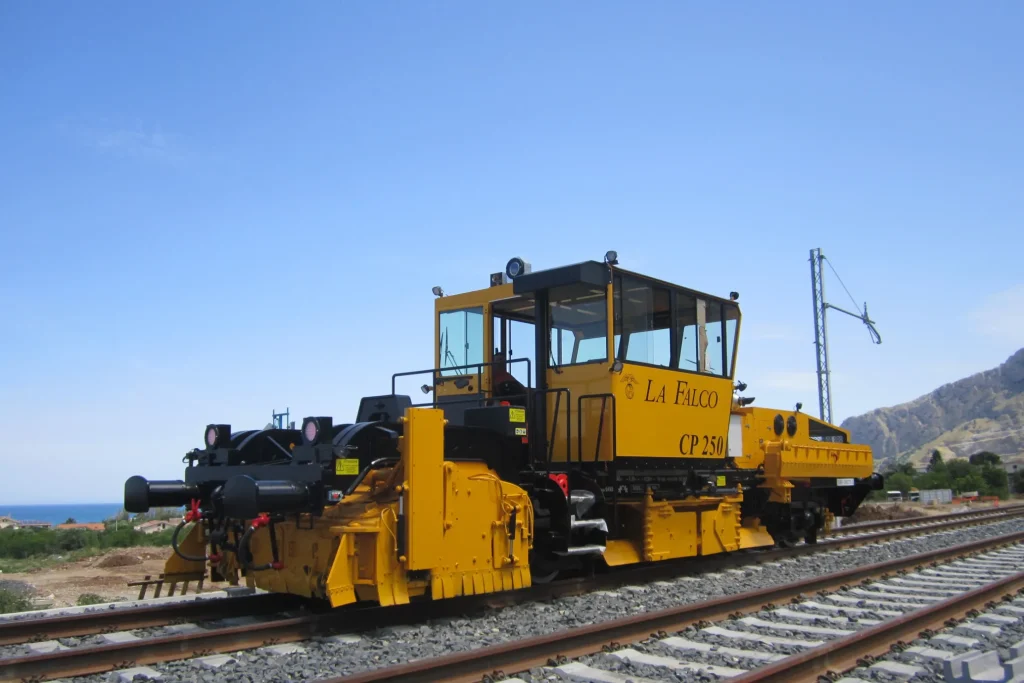
Ballast is a main component in railway infrastructure, used to provide stability, drainage, and vibration reduction. Ballast regulations and tamping are necessary for distributing and shaping ballast around rail tracks, which can significantly help restore their alignment and longevity. Ballast regulator machine equipped with brooms can remove the dust and sand from the rail track surfaces during ballast profiling.
Sleeper, Rail and Fastener Replacement
In some cases, defects in railway components cannot be removed, and they should be replaced to enhance their performance and efficiency. Therefore, different components of rail infrastructure, like rail tracks or sleepers, are replaced and renewed in the railway track maintenance process. Since these rail track maintenance activities may be time-consuming, using high-speed sleeper gantry machines for sleeper replacement and rails loader crane equipment speeds up the process.
5 Types of Rail Track Maintenance

Rail track maintenance in railway systems is provided in various types that specify the required maintenance activities. Here, we specifically proceed with the different types of rail track maintenance in the following:
| Routine | Preventive | Predictive | Corrective | Emergency | |
| Scheduled | ✓ | ✓ | X | X | X |
| Reactive (After Failure) | X | X | X | ✓ | ✓ |
| Urgency | X | X | X | X | ✓ |
| Minimizes Downtime | ✓ | ✓ | ✓ | X | X |
| Cost-Efficiency | ✓ | ✓ | ✓ | X | X |
| Required Skilled Analysis | X | ✓ | ✓ | X | X |
Routine Maintenance
Rail track maintenance should be performed routinely to ensure their performance and safety. Some slight defects are detected during this routine maintenance and removed by routine tasks, including visual inspection, checking and refilling lubricants, clearing vegetation, and refining small defects.
Preventive Maintenance
Preventive maintenance is one of the most common types of railway track maintenance. It typically refers to the periodic activities and inspections that address small defects, such as misalignments, cracks, ballast irregularities, etc. As its name suggests, preventive maintenance aims to prevent major damage from occurring and extensive repair costs.
Predictive Maintenance
Predictive maintenance in railway systems uses inspection data and advanced monitoring technologies to identify potential track defects before they lead to failures. Using sophisticated technological equipment, rail track components that are more susceptible to deterioration are detected. By doing so, the required rail track maintenance activities are performed on them to ensure that these components operate safely and efficiently.
Corrective Maintenance
Corrective maintenance, also known as reactive maintenance, includes both maintenance and repair activities. It refers to addressing issues or failures that have occurred on rail tracks and repairing them to ensure that they are ready to operate safely. Accordingly, it could be costlier than the other types of rail track maintenance.
Emergency Maintenance
Emergency maintenance refers to urgent activities performed in response to a failure after it occurs. In other words, emergency maintenance can be considered repair, aiming to proceed with rail track defects immediately. By providing necessary activities at times, emergency maintenance plays a critical role in bringing rail tracks back to safe operation.
Which Types of Rail Track Maintenance Is the Best?
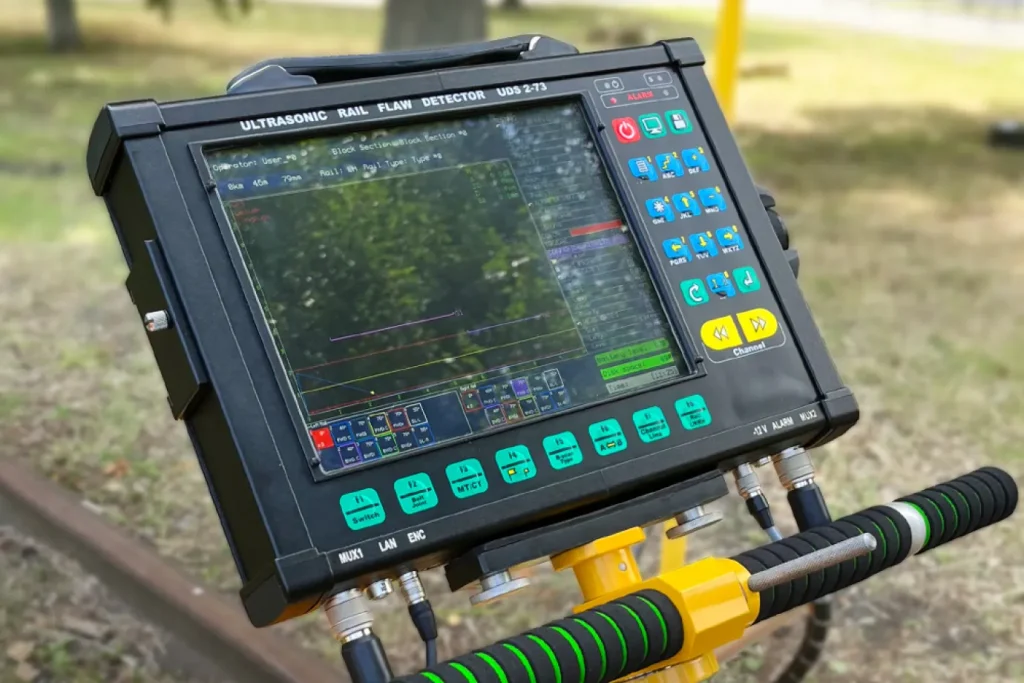
Since repair of rail components and tracks requires a significant amount of time costs a lot, different types of rail track maintenance can be beneficial. By identifying the flaws in rail material and structure before they show up, the time-consuming repair process and huge costs will be eliminated more. To do so, predictive maintenance may be necessary to invest in high-precision and accurate inspection devices first, but they guarantee the integrity of rail track operation. Whether the flaw detectors are more accurate and precise, this investment brings more cost-benefits. Laser-based, ultrasonic, and eddy current flaw detector systems are advanced, reliable solutions commonly used in predictive maintenance to identify potential defects at their first stages.
Key cost-benefits of predictive maintenance include:
- Reduced repair costs by detecting defects at an early stage
- Minimized downtime in railway operations
- Extended lifespan of rail infrastructure and components
- Improved safety through early fault detection
- Optimized maintenance planning using real-time data
Modern Technologies in Railway Track Maintenance

Optimizing railway inspection equipment and machinery with modern technologies makes them more reliable and efficient. here are some cutting-edge technologies used in railway track maintenance equipment based on 2026 market research for more efficient results:
AI-Based Rail Track Maintenance
Artificial Intelligence (AI) is one of the cutting-edge technologies that finds its way into the inspection and maintenance equipment, providing detailed technical analysis and reports. Using AI-powered ultrasonic flaw detection equipment offers a more accurate inspection of rail components and data analysis by eliminating human errors.
Remote Monitoring & Control
Whether it is inspection and measurement device or railway vehicle, remote monitoring and controlling allows for more efficient rail track maintenance activities. Remote access not only improves safety of operators in risky conditions but also supports hard-to-access areas and railway components.
Conclusion
he railway is the primary network, especially for mining and ore transportation. Due to the defects derived from various factors, rail tracks can be eroded and deteriorated over time. Since the repair cost is significantly intensive, it is required to inspect and detect the rail track flaws initially to prevent unpredictive and hazardous failures, which is referred to as rail track maintenance.
By understanding the importance of railway track maintenance, its different types, its activities, and the equipment used in this process, you can not only ensure the safety of the railway network and crews but also enhance the rail track’s operation as well.
FAQ About Rail Track Maintenance
Some rail track maintenance activities can be performed with no requirements of stopping rail operations, such as inspection and ballast regulation.
The cost of railway track maintenance widely depends on what equipment is used and what rail track maintenance activities is performed.
Can Rail Track Maintenance Be Done Without Stopping Rail Operations?