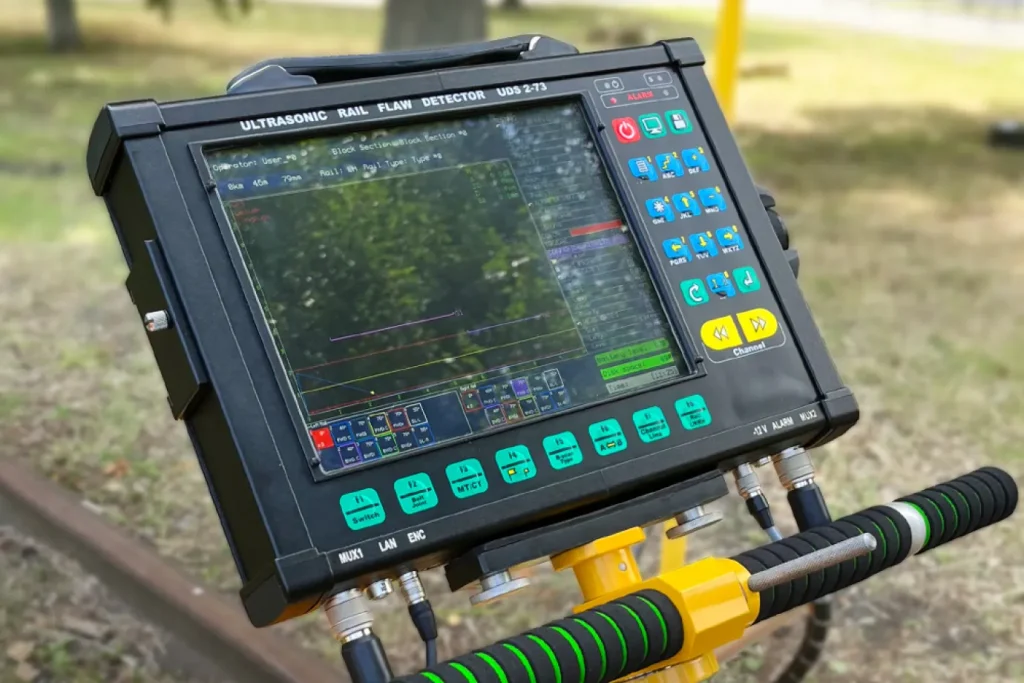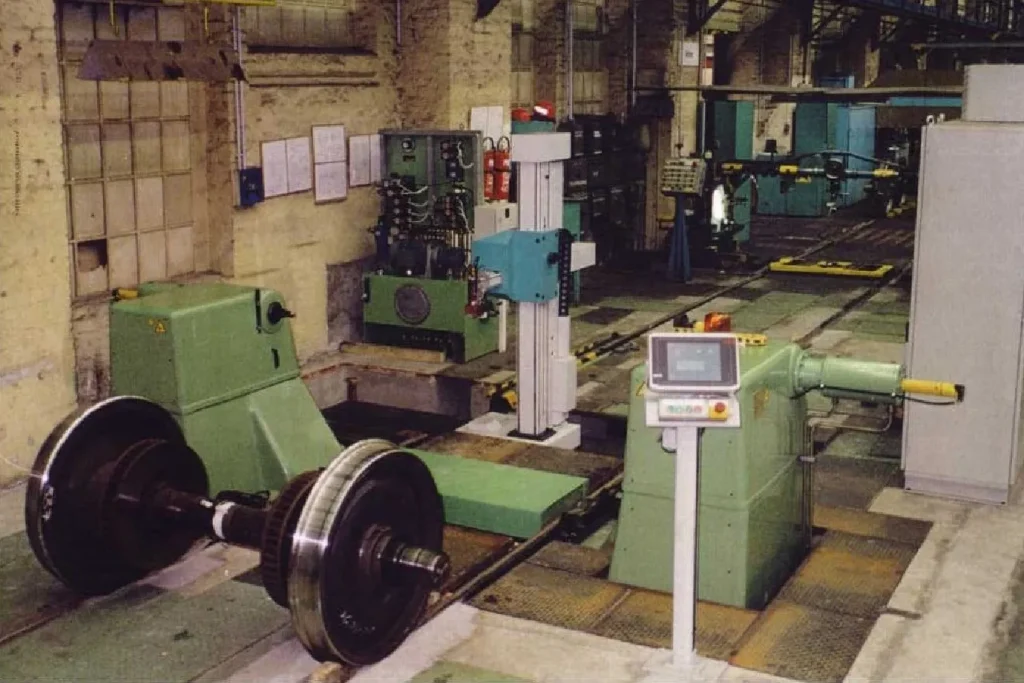

Among the NDT methods, ultrasonic and eddy current testing are two common and reliable methods used in railway maintenance. Eddy current testing is commonly used to detect rail surface defects while ultrasonic testing is widely used to inspect internal flaws of rail tracks and components. However, they also follow different methods to inspect. But when it comes to railway inspection, the debate of eddy current vs ultrasonic testing is one of the most important considerations. In this blog post, we will compare ultrasonic and eddy current testing methods in detail based on the critical factors, including inspection methods, reliability, setup requirements, and applications.
| Eddy Current Testing | Ultrasonic Testing | |
| Inspection Method | Generating Magnetic Field | Transferring UT Waves |
| Application | Surface Flaw Detection | Internal Flaw Detection |
| Accuracy & Reliability | Depending on the Device | Depending on the Device |
| Setup Requirements | No specific Equipment | Couplant |
Eddy Current vs Ultrasonic Testing: A Comparison of the 2 Best NDT Methods
Eddy current testing vs ultrasonic testing has been always a challenge while choosing an NDT method for railway inspection. Regular maintenance is a priority in the railway industry to ensure the safety and integrity of operations. Understanding the available railway inspection methods helps maintenance teams select the appropriate technology for each defect type and railway component. Selecting the appropriate railway inspection equipment depends on the defect location, inspected component, required inspection speed, and operating conditions. At its core, railway specialists and companies are often seeking the best method that provides maximum efficiency at minimum difficulty and cost. This is why the question “which railway inspection method is the best? has always remained an unsolved puzzle. Ultrasonic and eddy current testing are among the best NDT methods that are commonly used in railway maintenance. We will compare these two methods in detail based on the critical factors to reveal which is the best. Let’s start!
What Is Eddy Current Testing?
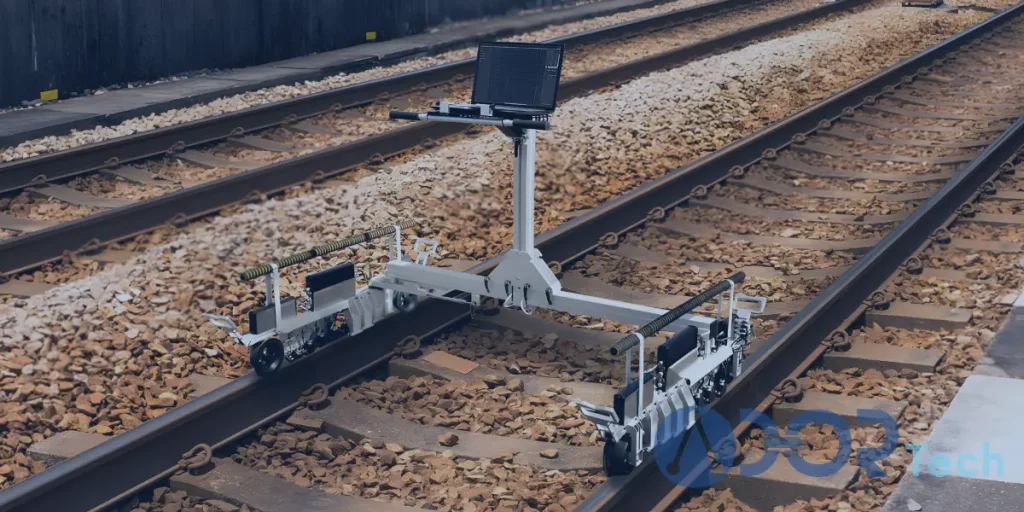
Eddy current is a non-destructive testing method that uses a coil with an alternating current (AC) to generate a magnetic field that induces circular eddy currents within the rail by interacting with the conductive metal. Another magnetic field is generated from eddy currents, opposed to the first one. If there are any defects in the rail infrastructure, the eddy currents are disrupted. Eddy current rail inspection does not require any additional equipment generally. Still, due to the generation of magnetic fields, any disconnection to the inspected component or lift-offs can disrupt the defect detection process. However, setup requirements can be relied on the type of flaw detection, too. Some of them require additional equipment to inspect the different railway components. This method is typically used to inspect track switches, welded joints, gauges, wheelsets, and axle boxes, detecting surface and near-surface flaws.
The key advantages of eddy current testing are:
- Detecting surface and near-surface flaws
- Identifying even the smallest cracks
- Requires no additional equipment
However, this method has also some limitations such as:
- Only works on electrically conductive materials
- Cannot detect internal flaws
- Sensitive to probe lift-off or inconsistent distances
- Device-dependent results
What Is Ultrasonic Testing?
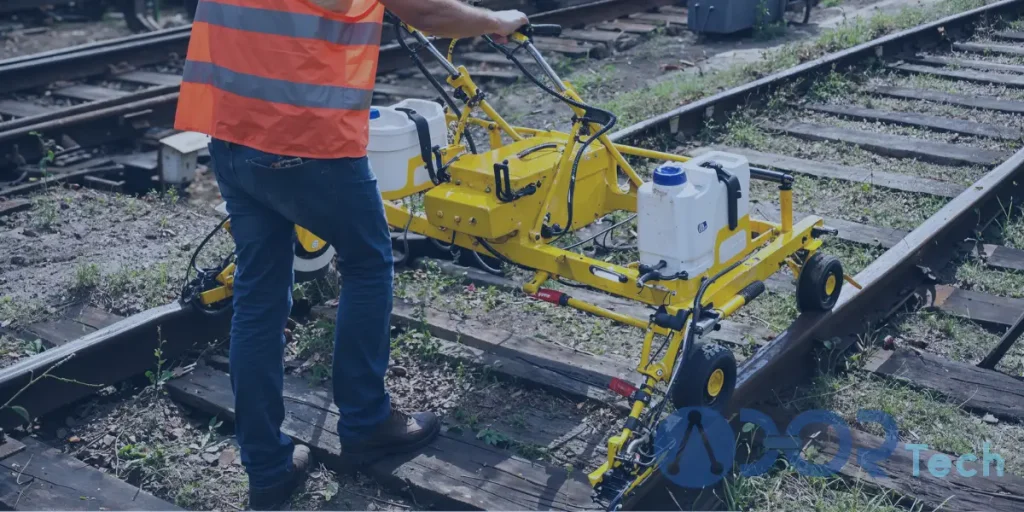
Ultrasonic testing is another NDT method where the ultrasonic waves are transferred into the railway infrastructure. These waves are travelling at a specific speed. If there are any failures or distances in the material, the ultrasonic waves are reflected back at different speeds. In this method, a gel or liquid couplant is required eliminates air gaps and provides acoustic continuity between the rail surface and the ultrasonic flaw detector, ensuring a more accurate and efficient inspection. Ultrasonic testing is often used to detect internal cracks and corrosion in rail, weld zones, wheelsets, and axle boxes.
Here are the key advantages of ultrasonic testing in railway inspection:
- Detecting internal flaws
- Reaches deep defects
- Used variously from rail tracks to overhead lines
The limitations of ultrasonic testing are also as follows:
- May miss surface cracks
- Requires a couplant gel or liquid
- Device-dependent results
Key Differences Between Eddy Current Testing vs Ultrasonic Testing
Here are the key differences of eddy current testing vs ultrasonic testing that drives you to better decision-making:
Testing Principle
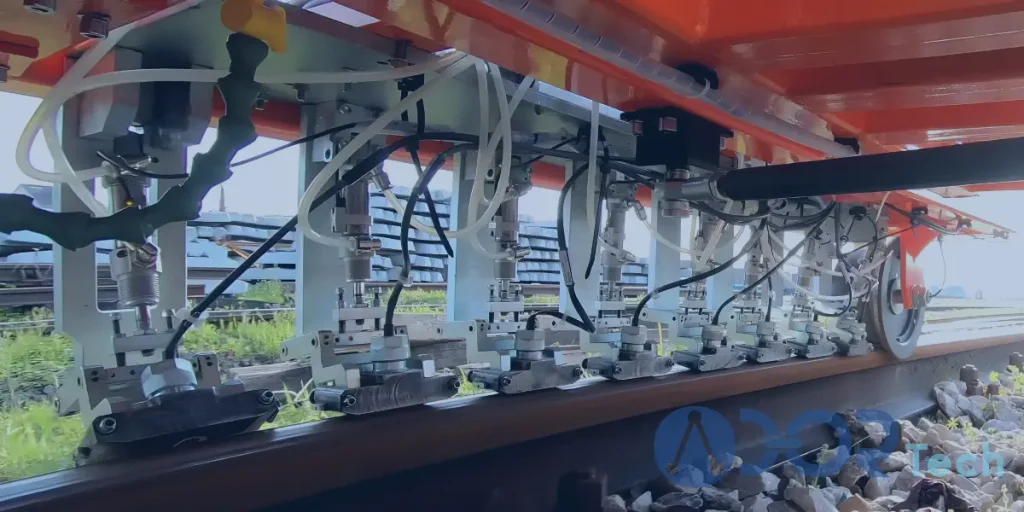
The main difference between eddy current vs ultrasonic testing is their testing principle. Eddy current testing generates magnetic field that induces circular eddy currents within the rail by interacting with the conductive metal while in ultrasonic testing, the high-frequency ultrasound waves are transferred into the inspected component and reflected back differently when there are discontinuities.
Applications: Surface vs Internal Defect Detection

They both offer an inspection of rail tracks, wheelsets, and axles, but in different ways. Both technologies can support train wheel inspection, although probe configuration and inspection procedures depend on the wheel area and defect being examined. However, ultrasonic can be used to inspect contact overhead lines, too. But the main application difference in these two methods refers to that eddy current is often used to detect surface and near-surface defects while ultrasonic testing is commonly used for internal inspection of components.
Couplant & Surface Preparation
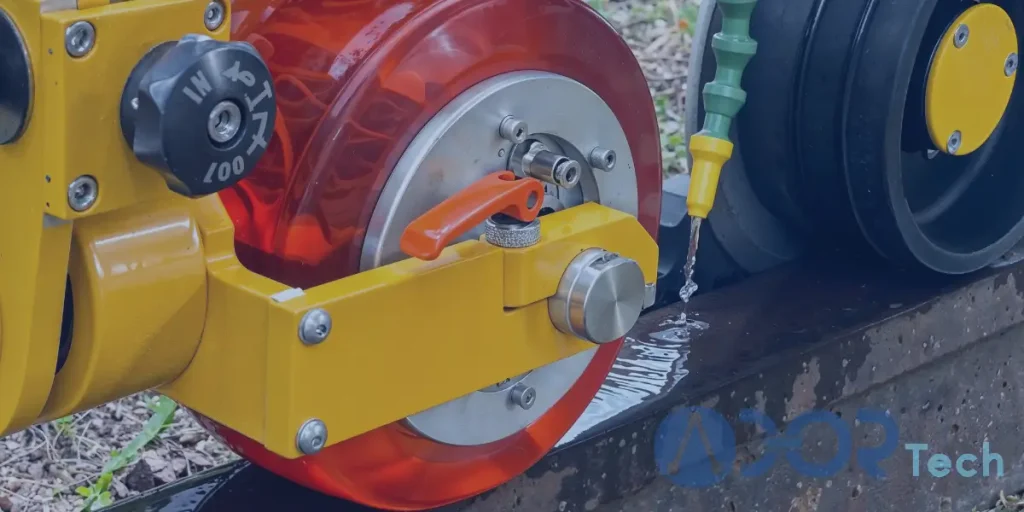
In ultrasonic testing, gel or liquid couplant plays a critical role due to eliminating air gaps and provides acoustic continuity between the rail surface and the ultrasonic flaw detector. This ensures a more accurate and efficient inspection. In eddy current testing, on the other hand, does not require couplant.
Inspection Speed & Automation
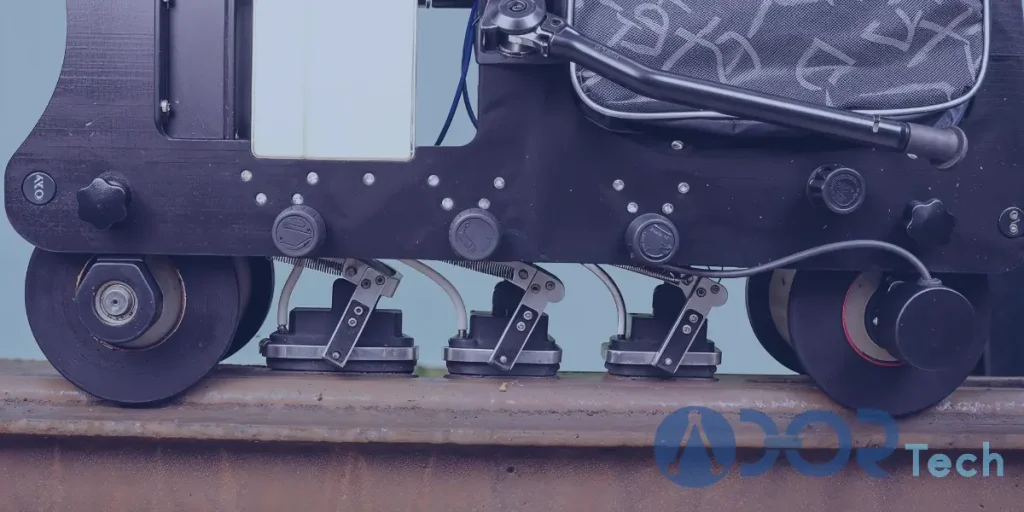
The inspection speed and automation level of eddy current and ultrasonic testing equipment widely depends on the device and defect type. Actually, eddy current testing can provide faster inspection rather than ultrasonic testing because it requires no couplant and can begin detection once it is deployed on the rail tracks or components. However, some of the ultrasonic testing systems are designed to apply couplant automatically by moving forward on the rail tracks, offering a high-speed inspection in comparison to those that should be used after applying couplant gel or liquid manually.
Accuracy & Reliability
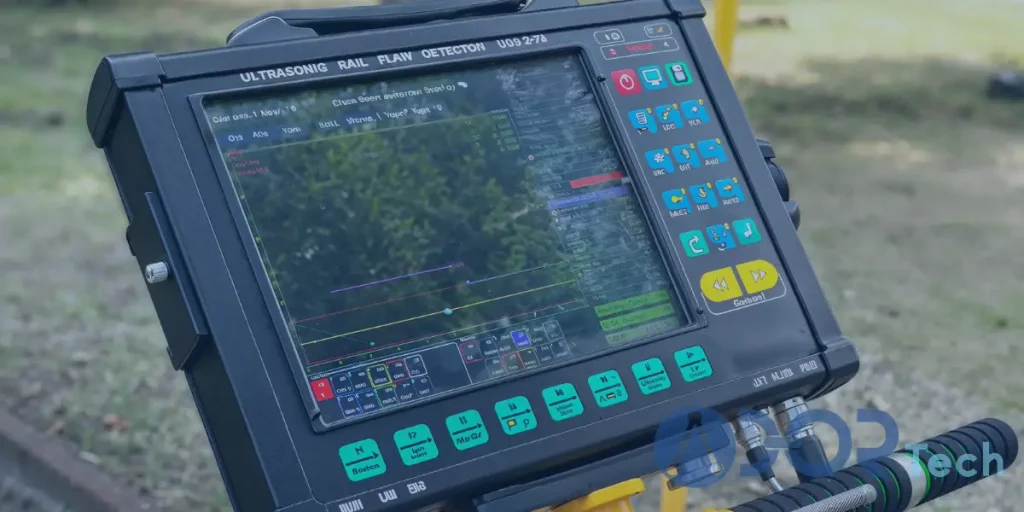
Whether for internal or surface flaw detection, it is crucial to use the most reliable systems to ensure that the inspection result is highly accurate. Therefore, the accuracy and reliability of both ultrasonic testing and eddy current flaw detectors largely depend on the system being used. A properly calibrated ultrasonic system reliably detects deep internal flaws, while a suitable eddy current detector provides greater sensitivity to surface and near-surface cracks.
Cost & Operational Requirements
It may seem that eddy current testing is cheaper than ultrasonic testing because it does not require any surface preparation. But it is a false attitude. Using specialized probes and reference standards can increase the initial cost of eddy current systems. In fact, the more advanced and reliable the system is, the more its initial cost be. The point that is typically missed in cost considerations is that the cheaper systems may save you money at first, but their inaccurate results and frequent maintenance requirements cost you a lot later.
Which Method Is Better for Each Railway Task? Ultrasonic Testing vs Eddy Current Testing
Which method is the best? This is a question that came up after comparing ultrasonic testing vs eddy current testing. To answer that, it is required to consider what application it will be used for. Ultrasonic rail inspection best suits deep infrastructural flaw detection, while eddy current rail inspection is suitable for detecting surface defects. This is the main factor that determines which method is the best for the railway project. But a combination of these two methods ensures that no flaws are missed, whether internal or surface ones. Therefore, rail specialists typically use both ultrasonic and eddy current testing methods together.
| Eddy Current Testing | Ultrasonic Testing | |
| Surface Rail Cracks | ✓ | X |
| Near-Surface Rail Defects | ✓ | X |
| Internal Rail Cracks | X | ✓ |
| Rail Corrosion | X | ✓ |
| Switch Inspection | ✓ | X |
| Weld Inspection | ✓ | ✓ |
| Wheel Surface Inspection | ✓ | X |
| Internal Wheel Inspection | X | ✓ |
When Should ECT and UT Be Used Together?
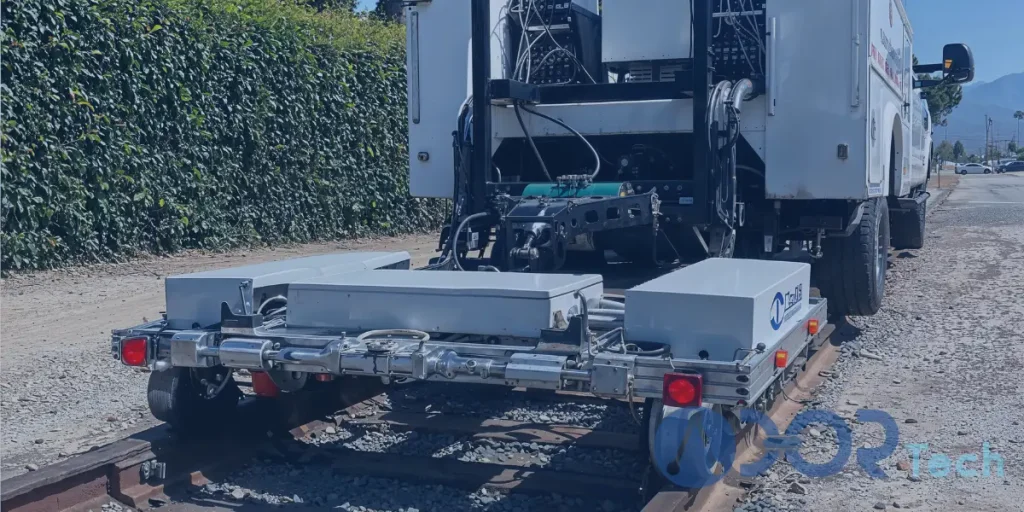
Eddy current and ultrasonic testing can actually complete each other. They are often used together when an inspection must identify both surface and internal defects. eddy current testing detects small surface and near-surface cracks while ultrasonic testing examines defects located deeper inside the material. Combining them is particularly useful for critical railway components such as rails, welds, wheels, and axles, where relying on one method could leave some defects undetected.
Conclusion
In summary, understanding different rail inspection methods provides a better vision to choose the suitable one. Ultrasonic and eddy current testing are two common non-destructive testing (NDT) methods used to detect railway defects, ensuring its safety and operational integrity. In this blog post, we compare these two methods based on their inspection methods, applications, accuracy and reliability, and setup requirements. By delving into what each one is suitable for and how they differ, decision-making becomes easier.
FAQs
Can Eddy Current Testing Inspect Through Paint?
Yes. Eddy current testing can be used to inspect through thin, non-conductive coatings, but coating thickness must be considered during calibration because it increases probe lift-off.
Can Ultrasonic Testing Work Without Couplant?
Conventional ultrasonic testing system requires a liquid or gel couplant. Specialized methods such as electromagnetic acoustic transducers can operate without it.
Do Eddy Current Testing and Ultrasonic Testing Provide Immediate Results?
Yes. Both methods display inspection signals in real time, although trained operators must interpret and verify the indications.