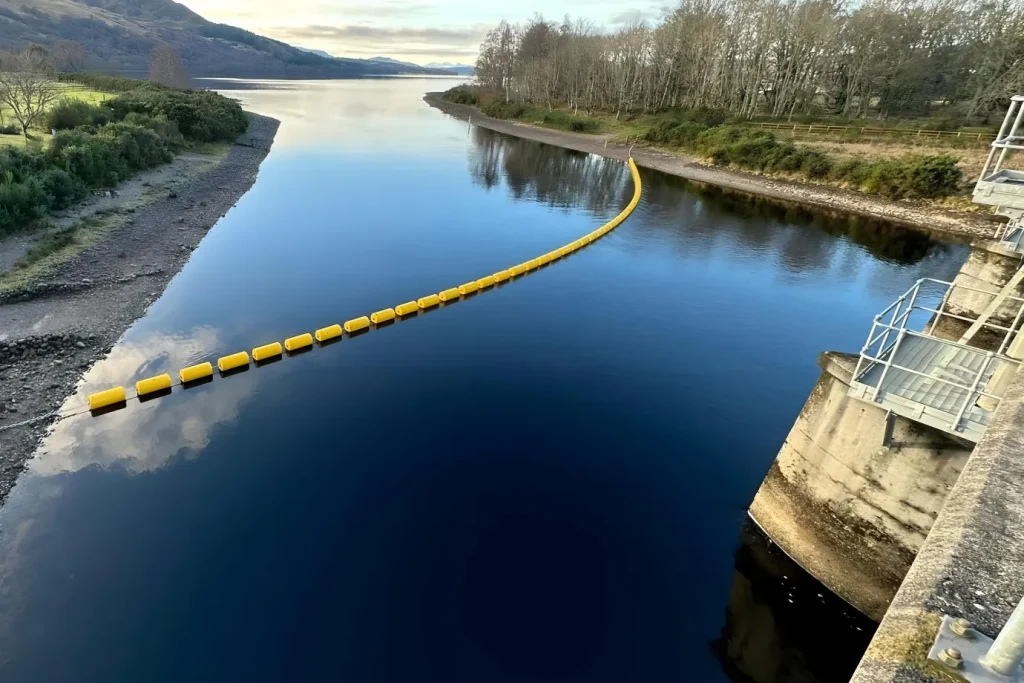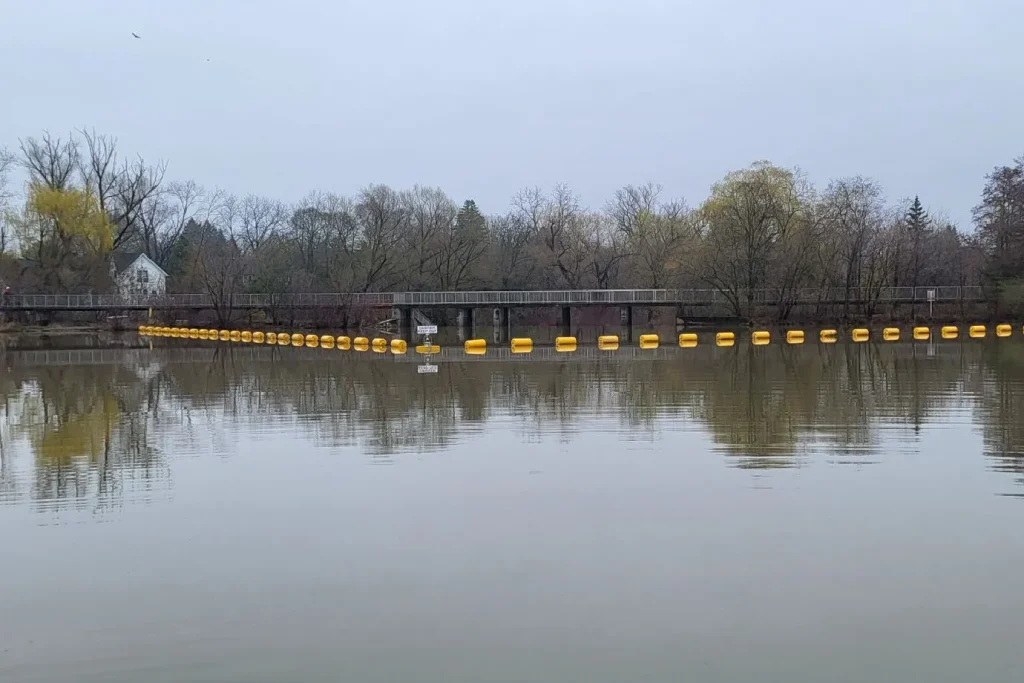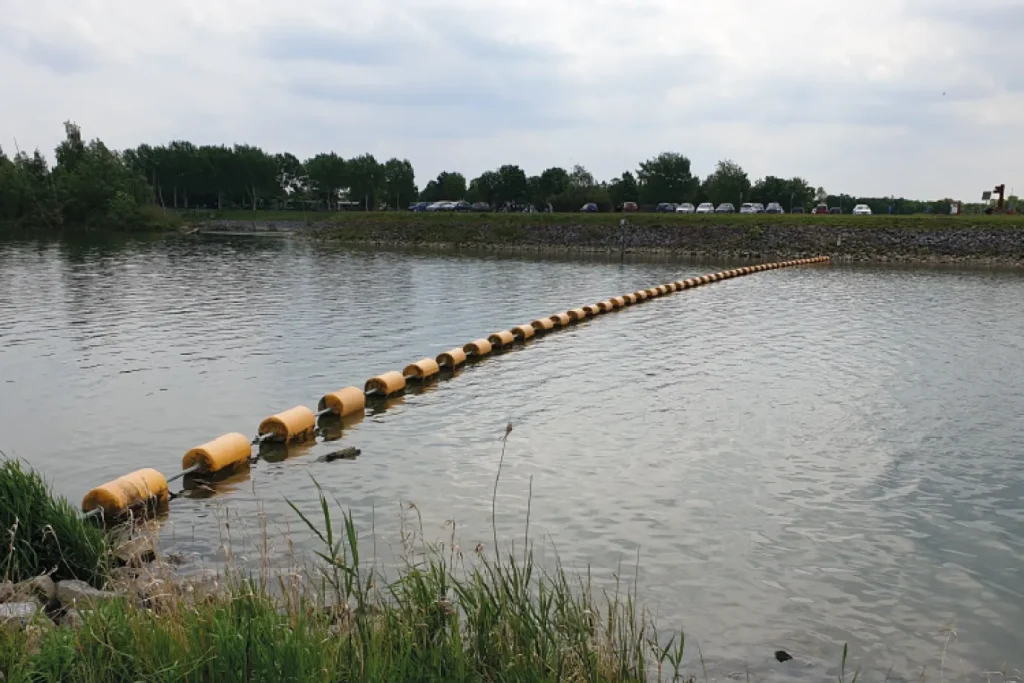
Floating security barrier design can directly affect its performance. The primary role of the floating security barriers is to limit public access to the restricted areas. Marine security barrier design should not only be efficient in preventing vessels or navigators from passing through but also be durable in different environmental conditions due to their crucial role. In this blog post, we will talk about how environmental factors, and water conditions can affect the floating security barriers and how their design can make them more durable and efficient in projects where the waves, currents, and tides are strong.
What Are Floating Security Barriers?
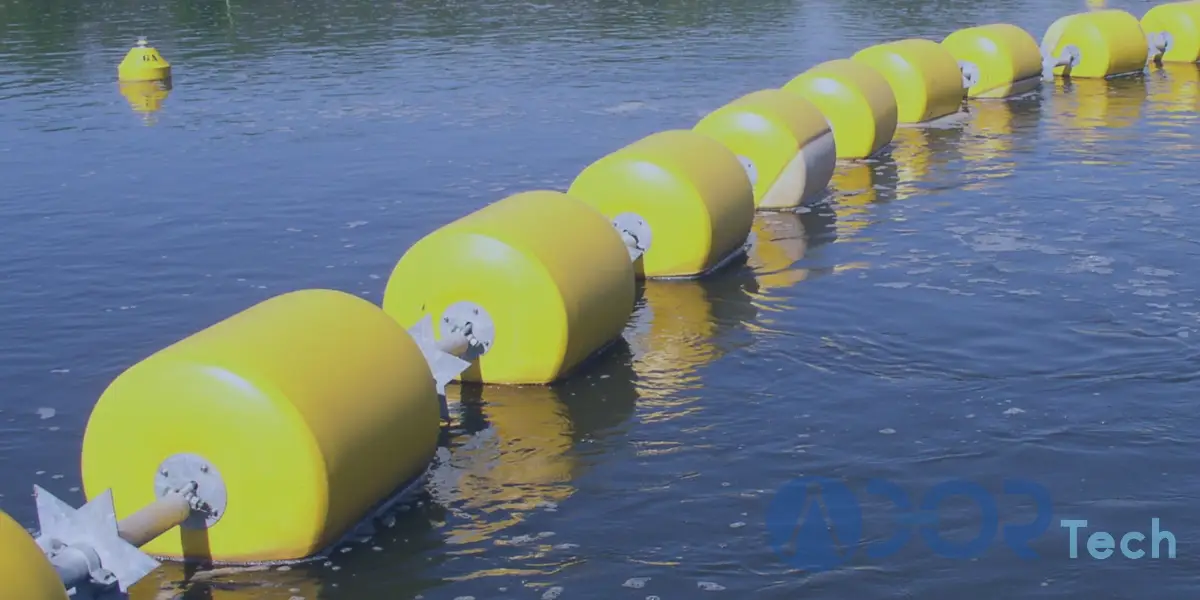
Floating security barriers, also known as marine security booms, are a type of waterway barrier system deployed on the water, acting as a boundary to limit public access to a restricted area and prevent vessels or navigators from passing through. Floating security barriers are widely used for military and defensive purposes, protecting dams and critical infrastructures, and also ports or terminals where should be restricted. The marine security barrier design typically includes float units with spikes on or in between to not only act as a waterway barrier to specify the restricted area but also permit the unauthorized vessels or navigators. They can also be equipped with steel nets underneath or on top to increase the defensive level as well.
Why Environmental Conditions Matters in Floating Security Barrier Design?
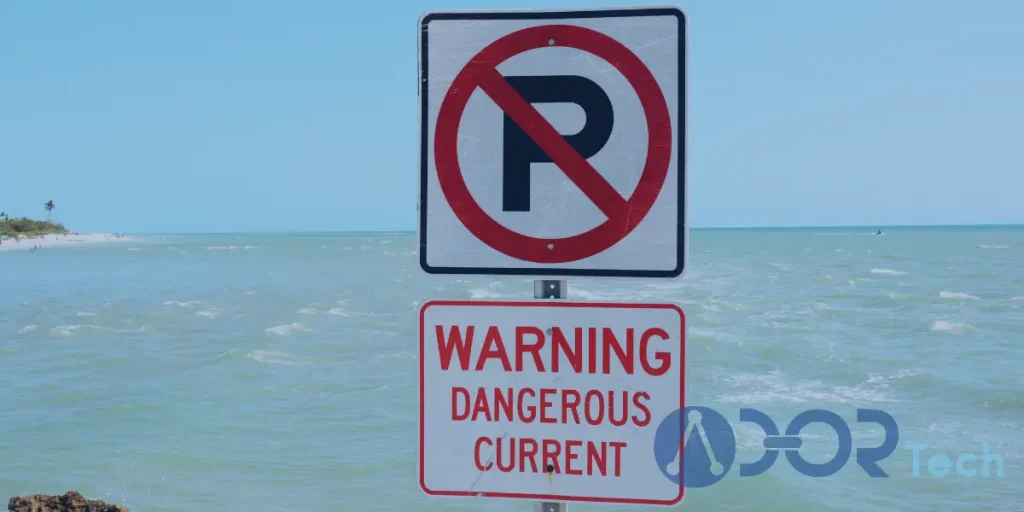
Floating security barrier design refers to the design of the waterway barrier, including the floats and connections, and the anchoring systems. So, when it comes to the terms of “design”, we should note that the whole package of floating security barriers is included. The marine security barrier design is absolutely subjected to environmental factors and water conditions. Waves create repeated impact and fatigue loads, currents generate continuous drag, and tides change water depth and tension, which all can easily disrupt the operation of security barriers if they are not designed appropriately. In some cases, there is a combination of these three water conditions, which require more durable and reliable design to ensure the waterway barrier operation.
Which Waterway Barrier Components Are Affected by Water Conditions?
The type and extent of loading on each floating security barriers component vary with site-specific water conditions, including waves, currents, tides, and water-level fluctuations. Waves create cyclic motions that cause the floats to roll and rotate, which often place repeated loads on connectors and anchor points. Height of waves and floating barriers freeboard are inversely related. It means that higher waves reduce the barrier’s effective freeboard during wave crests, increasing the risk of overtopping.
The currents, on the other hand, create continuous hydrodynamic drag on the floats, connectors, and underneath nets (if available). The currents force is transferred through connectors to the anchor points cause failures there, too. Moreover, the floating debris and trash may move by currents and caught by submerged components and the underneath net, increasing the exposed area and significantly raising drag loads, barrier deflection, and anchor demand.
Tidal flows change water depth and current direction. As the tide rises and falls, the vertical distance between the floating barrier and its fixed anchors changes. Reversing tidal currents also apply alternating loads to connectors, chains, anchors, and foundations, increasing wear and fatigue. In addition, non-tidal water-level fluctuations raise or lower a floating security barrier independently of the tide. Because the barrier floats, its elevation follows the water surface, while anchors, shoreline connections, and other fixed structures remain stationary.
| Waves | Currents | Tides | |
| Floats | ✓ | ✓ | ✓ |
| Connectors | ✓ | ✓ | ✓ |
| Anchor Points | ✓ | ✓ | ✓ |
| Underneath Nets | X | ✓ | X |
10 Key Factors for Choosing a Marine Security Barrier Design
The efficiency and functionality of floating security barrier design widely depend on the site environmental and water conditions. Water depth, water-level range, wave conditions, current conditions, tidal flows, debris and ice exposure, wind exposure, and security regulations are among the most crucial factors that should be considered before deploying a security waterway barrier. However, there are 10 key factors in marine security barrier design that make the barrier durable and reliable enough in every environmental and water condition:
1. Barrier Geometry & Profile
The size and shape of the float units and underneath net define the area exposed to waves and currents. Rounded or streamlined components generally reduce hydrodynamic drag compared with broad, flat surfaces. The design must limit environmental loading without reducing the required security coverage.
2. Buoyancy
Float displacement must support the barrier’s self-weight, structural hardware, nets, security spikes, gates, marine growth, ice, debris, and other accessories. Reserve buoyancy is also required so that additional loading does not excessively submerge the barrier or reduce its functionality.
3. Freeboard
The barrier must maintain sufficient height above the water to remain visible, discourage crossing, and reduce overtopping. Freeboard must be evaluated during waves, component loading, debris accumulation, and barrier motion; not only in calm water.
4. Stability
Float dimensions, center of gravity, center of buoyancy, and component arrangement control resistance to roll, pitch, rotation, and overturning. Heavy equipment can reduce stability and, in the end, disrupt the operation. Ballast may improve stability but also reduces freeboard and reserve buoyancy. So, the floating security barrier design should be a balance of stability and buoyancy.
5. Structural Strength
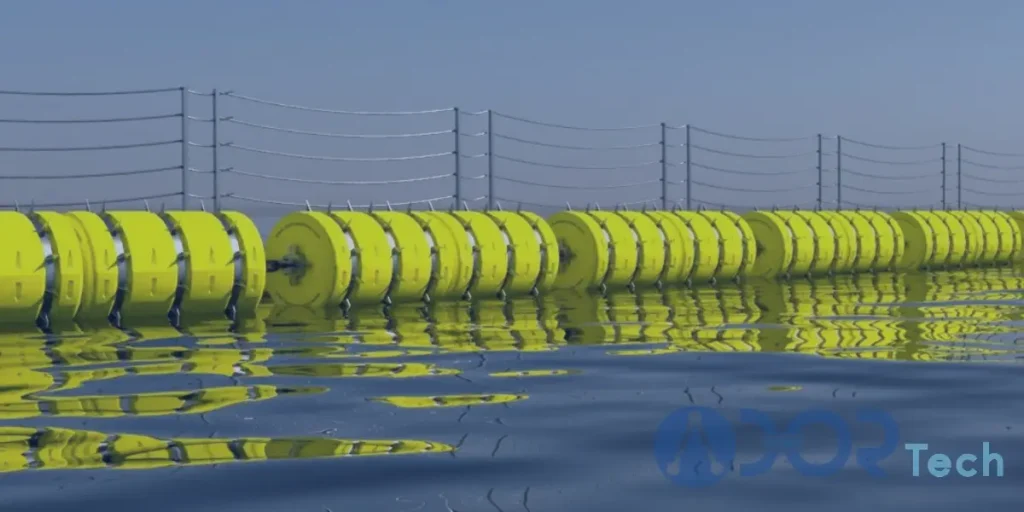
Anchor points, connectors, float units’ structure, and all the components used must withstand environmental loads and the specified vessel impact without unacceptable yielding, buckling, fracture, or permanent deformation. Local stress concentrations around connector mounts and towing or mooring attachments require particular attention.
6. Connection System
Connectors must transfer tensile, shear, bending, and impact loads between modules while permitting controlled relative movement. Excessively rigid joints can produce high peak stresses, while excessively flexible joints can allow unacceptable gaps or deflection. Pins, hinges, shackles, and connection plates must also resist fatigue, wear, and corrosion.
7. Underwater Net
Net depth, mesh size, cable strength, attachment spacing, and bottom clearance must suit the required security function. Smaller mesh can restrict access more effectively but collects more debris and presents greater resistance to currents. The net must tolerate deformation without tearing, excessive sagging, or pulling the floats below their intended waterline.
8. Materials
Materials must resist ultraviolet radiation, saltwater, temperature variation, abrasion, impact, and biological growth. The marine security barrier design should prevent galvanic corrosion between dissimilar metals and account for coating damage, connector wear, synthetic-rope degradation, and splash-zone corrosion.
9. Modularity & Replaceability
Modular construction allows damaged floats, connectors, nets, and fenders to be replaced without removing the complete system. Module length and connection arrangement must balance ease of maintenance against the number of joints, since each joint introduces wear and potential failure points.
10. Inspection & Maintenance Access
Connectors, nets, float units, and anchor points should be accessible for inspection and replacement. Drainage, sealed compartments, replaceable wear plates, and standardized fasteners improve serviceability and reduce downtime.
Floating Security Barrier Design for Canadian Project
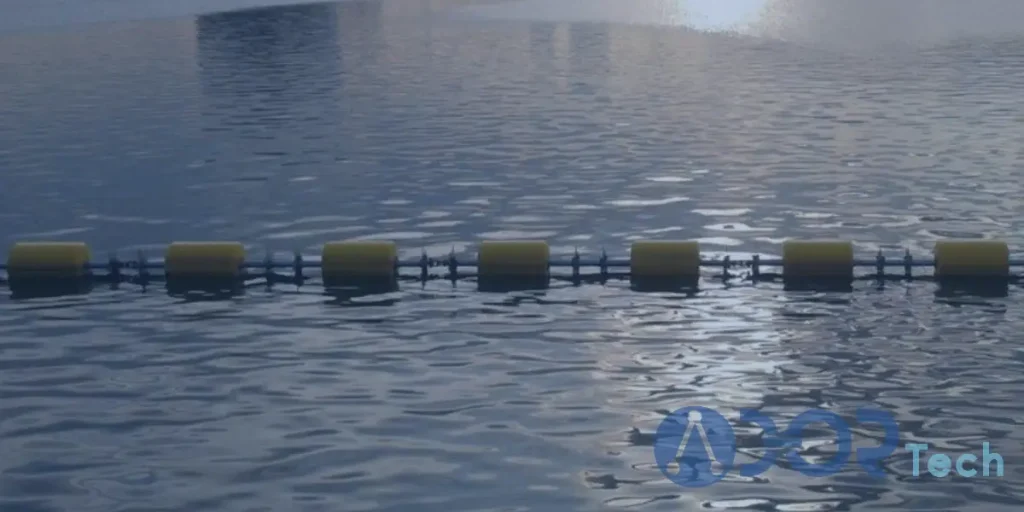
The suitable and efficient floating security barrier design for Canadian projects should consider the environmental factors and conditions of that location. Ice growth, moving ice, freeze-thaw cycles and breakup debris can govern connectors and float units. The engineering strategy may require ice-resistant components, a protected installation location or seasonal removal. Moreover, the marine security barrier design must be compliant with the Canadian regulations and standards.
Conclusion
In summary, floating security barrier design plays a vital role in efficiency and functionality of the barrier. Waves, currents, tides, and other environmental and water conditions can affect the operation of the floating security barriers. By considering the crucial marine security barrier design factors and understanding the effect that each condition places on the barriers, the risk of failure or operational disruption is significantly reduced.
FAQs
Which Barrier Components Are Most Affected by Water Conditions?
Floats, connectors, underwater nets, and anchor points can all be affected. The magnitude and type of loading depend on component depth, barrier geometry, water velocity, wave characteristics, and mooring configuration.
What Type of Anchoring System Is Required for a Floating Security Barrier Design?
The anchoring system must be designed for calculated environmental and impact reactions, seabed conditions, water depth, scour potential, and water-level range. Anchor selection cannot be based only on a manufacturer’s nominal holding-capacity rating.
Can One Floating Barrier Design Be Used in Every Water Environment?
No. A security waterway barrier designed for a calm reservoir may not be suitable for a tidal harbour, fast-moving river, or ice-prone waterway.