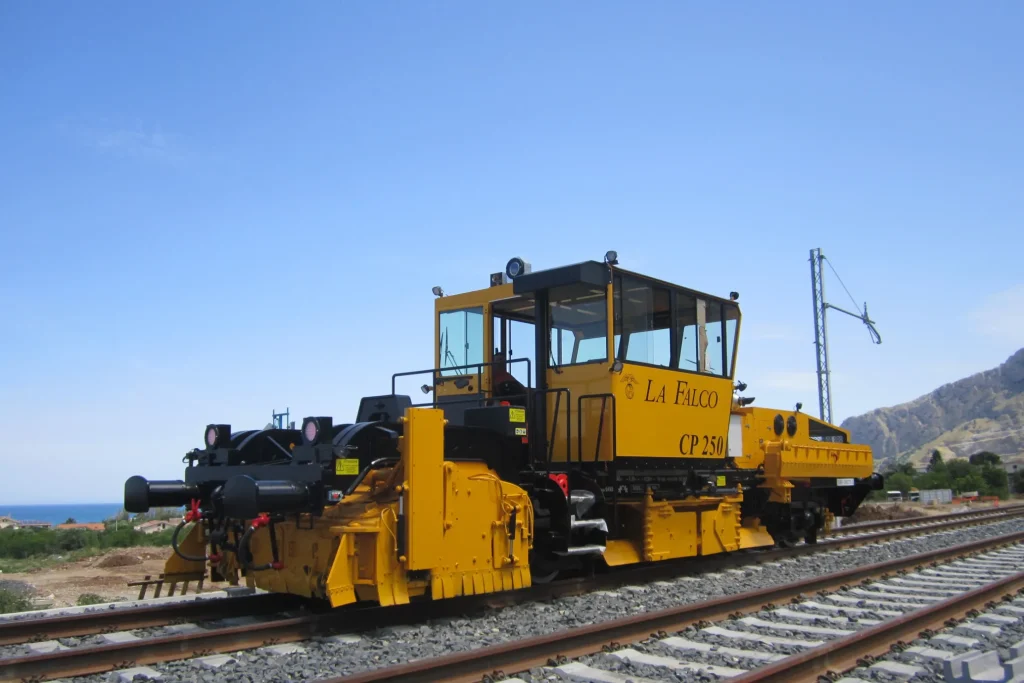

Road-rail excavator vs hi-rail kit equipped excavator has always been a critical comparison due to their vital role in maintenance of way projects. Road-rail excavators are purpose-built machines designed to operate on both roads and railways. These excavators integrate rail gear directly into their construction, featuring retractable rail wheels or other rail-ready components that allow them to transition smoothly between road and rail modes. This purpose-built design ensures optimal performance and safety for rail applications from the factory.
On the other hand, hi-rail kit-equipped excavators take a different approach. Hi Rail Conversion Kits retrofit conventional excavators with retractable rail wheels or guides, allowing them to operate on both roads and railway tracks. This approach can provide a flexible and cost-effective option for projects requiring occasional or short-term rail access.
| Features | Road-Rail Excavator | Hi-Rail Kit-Equipped Excavator |
| Rail Purpose-Built | ✓ | X |
| Rail & Road Operation | ✓ | ✓ |
| Road-Rail Conversion Required | X | ✓ |
| Variety in Attachments | ✓ | ✓ |
| Frequent Rail Operation | ✓ | X |
| Budget-Friendliness | X | ✓ |
In this comprehensive blog post, we will delve into the intricacies of these two configurations, exploring their design differences, mobility and access capabilities, excavation and material handling capabilities, versatility in performing additional tasks, safety considerations, and cost and maintenance requirements.
What Is a Road-Rail Excavator?

Road-rail excavators are purpose-built machines designed specifically for railway construction and maintenance projects. These excavators seamlessly integrate the capabilities of traditional excavators with the ability to operate directly on rail tracks, eliminating the need for additional rail gear or modifications. They are engineered from the ground up to meet the demanding requirements of rail work, ensuring optimal performance, safety, and efficiency in both road and rail environments.
Design & Configuration
Road-rail excavators feature robust and durable construction, with a heavy-duty undercarriage designed to withstand the rigors of rail work. They are equipped with retractable rail wheels or other rail-ready components that allow them to transition between road and rail modes with ease. These rail wheels are typically hydraulically operated and can be raised or lowered as needed, providing a smooth transition from road to rail and vice versa.
Mobility & Access to Rail Tracks
One key advantage of road-rail excavators is their ability to navigate and operate directly on rail tracks. Their retractable rail wheels or other rail gear components allow them to quickly move along the tracks, providing access to even the most remote or difficult-to-reach work sites. This mobility is crucial for tracking maintenance, ballast distribution, vegetation management, and emergency response situations.
Excavation and Material Handling Capabilities
While their primary purpose is railway construction and maintenance, road-rail excavators retain traditional excavators’ excavation and material handling capabilities. They are equipped with powerful hydraulic systems, robust boom, and arm configurations, allowing them to tackle various excavation tasks, such as digging trenches, loading and unloading materials, and demolition.
Many road-rail excavators offer a variety of attachments and tools, including buckets, hammers, grapples, and shears, which can be easily interchanged to adapt to different job requirements. These attachments enhance the machine’s versatility, enabling it to perform tasks beyond traditional excavation, such as vegetation management, rail tie replacement, and track surfacing.
Additional Applications & Versatility
Beyond their core excavation and material handling capabilities, road-rail excavators offer additional versatility and can be employed for various railway construction and maintenance tasks. These tasks may include:
- Ballast distribution and maintenance
- Track lifting and realignment
- Debris removal and cleanup operations
- Emergency response and disaster recovery
- Bridge construction and repair
- Utility installation and maintenance along rail corridors
The ability to operate on both road and rail environments makes road-rail excavators highly versatile, allowing them to be easily transported between job sites and quickly deployed for a wide range of applications.
Safety & Operational Considerations
Safety is a paramount concern when operating heavy machinery on rail tracks. Road-rail excavators are designed with various safety features to protect operators and ensure compliance with railway safety regulations. These features may include:
- Operator protection systems or falling object protection systems
- Roll-over protection structures
- Rear and side-view cameras for enhanced visibility
- Rail-compliant lighting and signaling systems
- Automatic breaking and rail-clamping systems
Road-rail excavators typically undergo specialized training to ensure they can operate the machine safely in both road and rail environments. This training covers rail safety protocols, track access, and emergency response procedures.
Cost & Maintenance Requirements
Road-rail excavators are generally more expensive than conventional excavators due to their specialized design and rail-ready components. However, their versatility and ability to operate on both road and rail can often offset the higher initial investment through increased productivity and efficiency on railway projects.
Maintenance requirements for road-rail excavators may be higher than those of regular excavators, as the rail gear components and additional safety features require regular inspections and servicing. Proper maintenance is crucial to ensure the machine’s reliability and longevity, mainly when operating in a demanding rail environment.
What Is a Hi-Rail Kit-Equipped Excavator?

Hi-rail kit-equipped excavators offer a versatile and cost-effective solution for railway construction and maintenance projects. These conventional excavators have been retrofitted with specialized hi-rail kits, allowing them to transition between road and rail environments. Combining the capabilities of a standard excavator with the mobility of rail gear provides a flexible and adaptable option for rail-related tasks.
Equipment Design & Retrofit Process
Hi-rail kit-equipped excavators start as regular excavators designed for road use. The hi-rail kit, which typically includes retractable rail wheels or guides, is installed on the excavator’s undercarriage. This retrofit involves modifying the excavator’s frame and hydraulic systems to accommodate the rail gear components.
The installation of the hi-rail kit is often performed by specialized companies, ensuring that the retrofit meets all necessary safety and operational standards. The process can be completed on new or used excavators, allowing contractors and rail operators to leverage existing equipment and extend its capabilities.
Rail Mobility & Track Access
Once equipped with the hi-rail kit, excavators can operate on roads and railway tracks. The retractable rail wheels or guides can be lowered onto the tracks, allowing the excavator to move along the rails quickly. This mobility provides access to remote work sites and enables efficient machine transportation between job locations.
Excavation & Material Handling Proficiency
Despite adding the hi-rail kit, hi-rail kit equipped excavators retain their base excavator models’ core excavation and material handling capabilities. They can be equipped with various attachments, such as buckets, hammers, grapples, and shears, to perform various tasks, including digging, demolition, material handling, and vegetation management. The excavators’ hydraulic systems and boom/arm configurations remain unchanged, ensuring that the hi-rail kit installation does not compromise their digging and lifting capacities.
Versatility in Railway Applications
Hi-rail kit-equipped excavators can be employed for various railway construction and maintenance tasks. The versatility of hi-rail kit-equipped excavators lies in their ability to quickly transition between road and rail environments, making them suitable for projects that require frequent job site changes or involve both road and rail components. These tasks may include:
- Track maintenance and repair
- Ballast distribution and management
- Vegetation control along rail corridors
- Utility installation and maintenance
- Bridge construction and repair
- Emergency response and disaster recovery operations
Safety Considerations & Operator Training
Operating heavy machinery on rail tracks requires stringent safety protocols and specialized training. When using hi-rail kit-equipped excavators, operators must be trained in rail safety procedures, track access protocols, and emergency response measures.
Safety features may vary depending on the excavator model and the hi-rail kit. However, common safety elements include operator protection systems, roll-over protection structures, rail-compliant lighting and signaling systems, and automatic braking mechanisms.
To ensure the safety of personnel, equipment, and rail operations, it’s essential to follow all manufacturer guidelines and industry regulations when operating hi-rail kit-equipped excavators on rail tracks.
Cost and Maintenance Factors
Compared to purpose-built road-rail excavators, hi-rail kit-equipped excavators often offer a more cost-effective solution, particularly for contractors or rail operators who already own suitable excavator models. The initial investment involves the cost of the hi-rail kit and the retrofit process, which can be significantly lower than purchasing a new road-rail excavator.
However, it’s important to consider the excavator’s and the hi-rail kit components’ ongoing maintenance requirements. Regular inspections, servicing, and potential repairs may be necessary to ensure safe and efficient equipment operation on rail tracks. Maintenance costs can vary depending on the specific excavator model, the hi-rail kit used, and the frequency and intensity of rail operations. Proper maintenance is crucial to minimizing downtime and maximizing the equipment’s lifespan.
Cost & Maintenance Factors

Hi-rail kit-equipped excavators are a cost-effective solution, particularly for contractors or rail operators who already own suitable excavator models. The initial investment involves the cost of the hi-rail kit and the retrofit process.
inspections, servicing, and potential repairs may be necessary to ensure safe and efficient equipment operation on rail tracks. Maintenance costs can vary depending on the specific excavator model, the hi-rail kit used, and the frequency and intensity of rail operations. Proper maintenance is crucial to minimizing downtime and maximizing the equipment’s lifespan.
Road-Rail Excavator vs Hi-Rail Kit: Detailed Comparison
One of the primary differences is their mobility and access on rail tracks when it comes to hi-rail kit-equipped excavator and road-rail excavator comparison. Road-rail excavators, being purpose-built for rail applications, offer smoother and more seamless rail mobility. Their integrated rail gear components and optimized weight distribution allow efficient navigation and direct operation on the tracks. In contrast, hi-rail kit-equipped excavators may experience slight rail mobility limitations due to the rail gear’s retrofit nature. Weight distribution, center of gravity, and track stability vary depending on the excavator model and the hi-rail kit.
Both types of equipment leverage the core strengths of their respective base excavator models in terms of excavation and material handling capabilities. Road-rail excavators, explicitly designed for rail operations, may offer slight stability and reach advantages during excavation tasks on rail tracks. Hi-rail kit-equipped excavators retain their original excavator models’ excavation and material handling proficiency, ensuring contractors can leverage their existing equipment’s capabilities while gaining rail access.
Both road-rail excavator vs hi-rail kit equipped excavator offer a range of possibilities regarding versatility and additional applications beyond excavation tasks. These applications may include ballast distribution, vegetation management, utility installation, bridge construction, and emergency response operations. However, road-rail excavators, explicitly designed for rail applications, may have an edge in specialized attachments and optimized stability and reach for railway tasks.
Safety is a critical consideration when operating heavy machinery on rail tracks, and both types of equipment incorporate various safety features. Road-rail excavators, being purpose-built, may have an advantage in terms of integrated safety features, optimized operator visibility, and ergonomics. Hi-rail kit-equipped excavators, on the other hand, can also be outfitted with appropriate safety components, and proper operator training is crucial for safe operation on rail tracks regardless of the equipment configuration.
The cost factor is a significant consideration when choosing between road-rail excavators and hi-rail kit-equipped excavators. Road-rail excavators generally have a higher initial investment due to their specialized design and rail-ready components. However, their versatility and optimized performance on rail projects often justify the higher upfront cost through increased productivity and efficiency. Hi-rail kit-equipped excavators offer a more cost-effective solution, particularly for contractors or rail operators who already own suitable excavator models, as the initial investment involves the cost of the hi-rail kit and the retrofit process.
Ultimately, the choice between road-rail excavators and hi-rail kit-equipped excavators will depend on various project-specific factors, including budget constraints, operational requirements, long-term cost considerations, and the needs of the railway construction or maintenance project.
When Does a Road-Rail Excavator Make More Sense?
Hi-rail kit equipped and road-rail excavator comparison clearly reveals that road-rail excavators are ideal for the projects with frequent or intensive railway operations and specialized track maintenance. They also can be the best choice when optimized rail mobility, stability, and long-term performance are priorities. But road-rail excavators require higher initial investment, and they are not suitable if the project has cost limitations.
When Can a Hi-Rail Conversion Be Considered?
Hi-rail kit-equipped excavator best suits the projects with short-term operations, such as temporary tasks, short construction works, seasonal or periodic maintenance, and emergency restorations. They also should be considered in budget-sensitive projects and when converted an existing excavator instead of purchasing a purpose-built machine is required. In addition, the rail mobility of hi-rail kit-equipped excavators may be smoother and smoother than purpose-built road-rail excavators.
Questions to Ask Before Choosing
Before choosing between road-rail excavator vs hi-rail kit, the priorities and the demands of the project should be clarified. Both road-rail excavator vs hi-rail excavator are efficient solutions in railway maintenance of way, but each is designed to meet different operational needs. Before making a decision, it should be defined how frequently the excavator will operate, whether the project is continuous or short-term, what level of mobility and stability is required, does the excavator meet railway safety standards, and are the initial investment and maintenance costs aligned with the project’s budget. By doing so, the hi-rail kit and road-rail excavator comparison could provide you with better insights into choosing the best suited one.
Conclusion
Choosing between road-rail excavator vs hi-rail kit equipped excavator is a critical decision that can significantly impact railway construction and maintenance projects’ overall efficiency, safety, and cost-effectiveness. While both options offer unique advantages, the optimal choice ultimately depends on each project’s specific requirements and constraints. With their purpose-built design and seamless rail mobility, road-rail excavators excel in demanding rail applications and offer unparalleled performance and safety features. Conversely, hi-rail kit-equipped excavators provide a flexible and cost-effective alternative, particularly for contractors or rail operators already possessing suitable excavator models.
Regardless of the chosen configuration, it is essential to prioritize operator training, adherence to safety protocols, and proper maintenance to ensure the longevity and reliable operation of the equipment. By carefully evaluating project scope, budget, and long-term operational needs, contractors and rail operators can make an informed decision that maximizes productivity, minimizes downtime, and ensures the successful completion of railway projects. Ultimately, the decision should balance performance, versatility, and cost-effectiveness, ensuring optimal value for the investment.
FAQs
Can Any Excavator Be Equipped with a Hi-Rail Kit?
No. The excavator must be compatible with the kit’s design, weight limits, undercarriage, hydraulic system, and applicable railway requirements.
Can Both Road-Rail Excavator vs Hi-Rail Kit Be Equipped with Multiple Attachments?
Yes. There are no limitations for road-rail excavator vs hi-rail kit to be equipped with various attachments.
What Maintenance Does Hi-Rail Equipment Require?
Rail wheels, brakes, hydraulic components, mounting points, fasteners, and safety systems require regular inspection and maintenance.