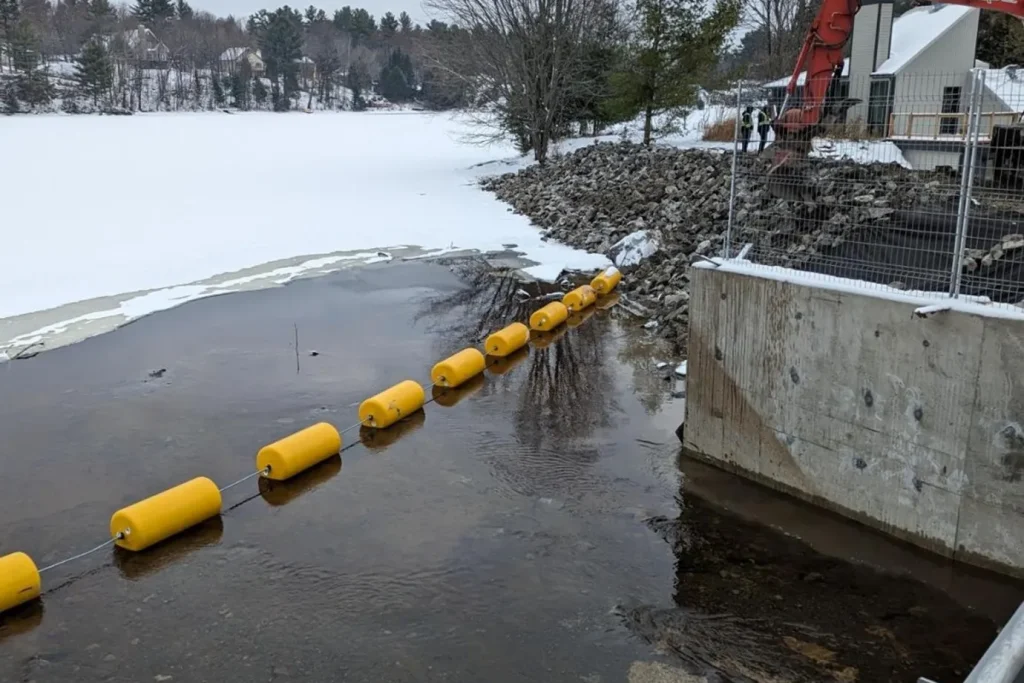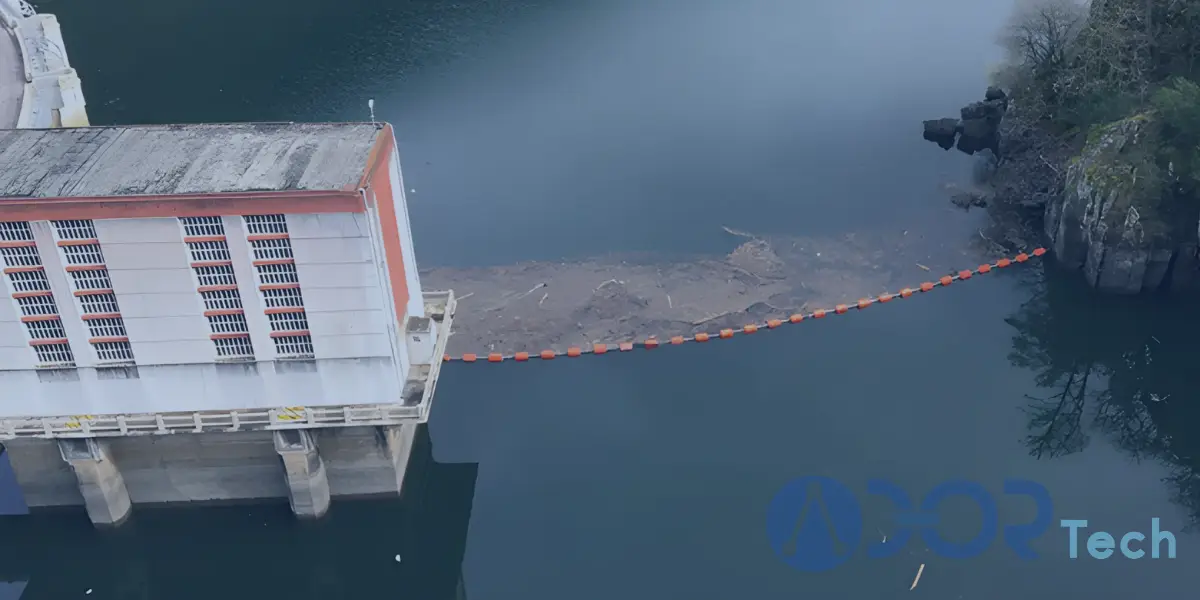
Log booms are a type of floating barriers used to contain and prevent the movements of logs and large-scale debris, like ice. In 20th century, these barriers were used to handling the logs in log transportation process; however, they are not only the main solution for controlling the movements of floating logs but also act as safety barriers near dams and reservoirs. Floating deadhead logs can lead to navigation hazards and infrastructure failures, so in this blog post, we will understand what is a log boom and how do booms work for controlling the floating logs. Then, we will go through the importance of using log booms around the timber rafting and logging in water. We’ll also compare the log booms and floating debris boom to learn how do they differ practically.
What Is a Log Boom?

log screen boom are actually a type of environmental barrier, including floating units to keep the barrier buoyant and the underneath screens to contain the logs. These barriers are often used to control the free movements of logs, timbers, and other large-scale floating objects. In water-based log transportation or timber rafting, uncontrolled logs can drift away from storage or collection areas. Storms and other environmental factors can carry deadhead logs and large branches into marinas. These floating objects can pose hazards to marine infrastructure and boating areas. Environmental booms, such as log booms, act as barriers that collect and contain logs and other floating debris, preventing them from moving freely across the water.
How Do Booms Work to Contain Logs?
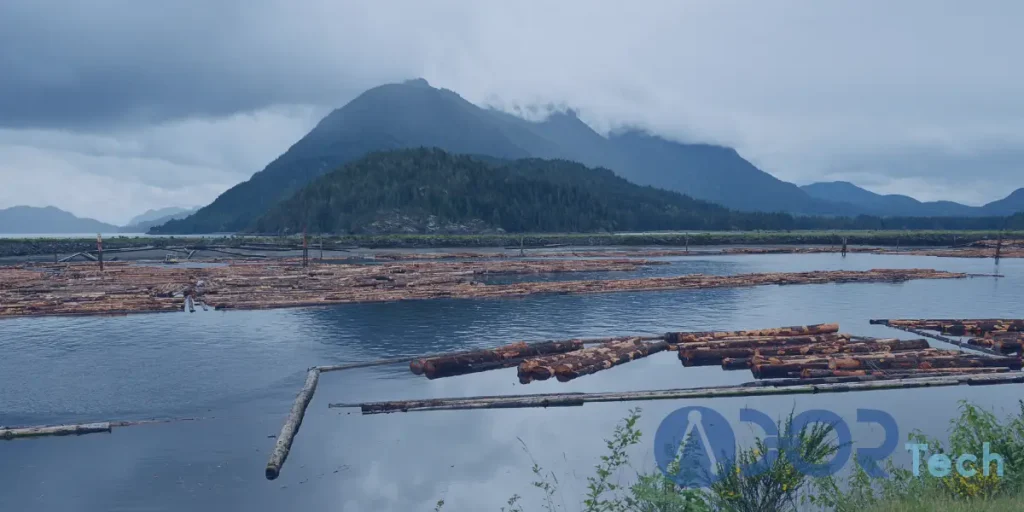
Log booms are created from three main parts: floating units, connectors and anchoring system, and underneath screens. Floating units are steel or polyethylene components joined together with the connectors to create a seamless barrier. These floating units include screens underneath to ensure no logs can pass through from under the barrier. Log booms are anchored from both ends to the specified points, keeping the barrier in place. So, the floating objects and logs are contained behind the log booms and cannot move freely on the water surface.
Because of the heavy loads on the deadhead logs, timbers, and other large-scale objects, log booms should be engineered with high strength at the connection and anchoring points to be capable of containing them. The floating units also should be designed with high strength and resistant materials to avoid failures and breakages when the logs and floating objects crash into them, especially in marinas with high currents and waves. The capability of log booms in handling the large-scale objects make them to be used as a barrier that can prevent heavy load ice in Canada or the regions where ice handling is the main concern as well.
A Short History of Log Booms in Canada
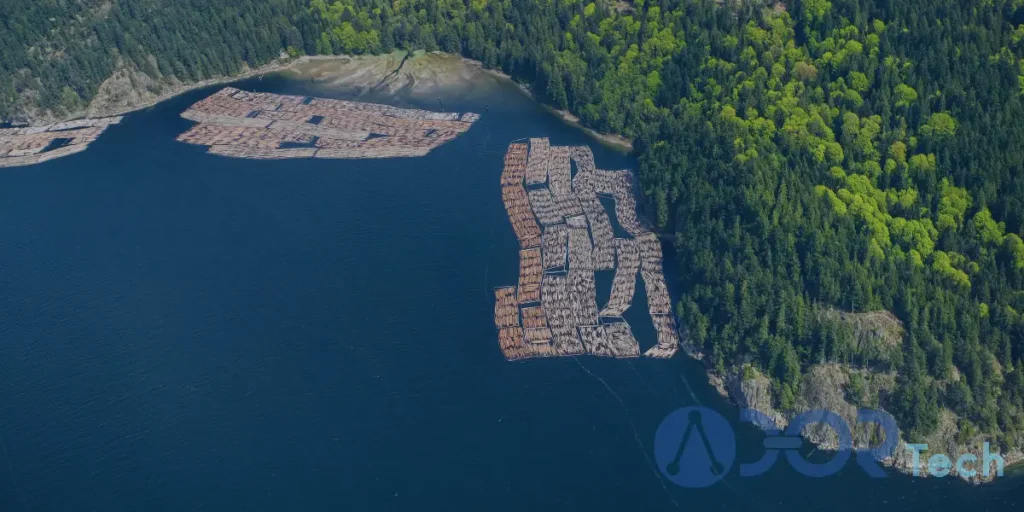
Log booms play a critical role n the Canadian and North American timber industry during the 19th and early 20th centuries. Crews often cut trees in winter and position the deadhead logs and large-scale branches beside rivers using logging boom boat. When spring brought higher water levels, the timber was released downstream in a process, which is known as log driving. Log booms collected the arriving logs so workers could sort them and direct them toward sawmills.
Log booms also supported timber rafting, in which logs were assembled into larger floating units for log transportation. This process kept the timber organized into connected or enclosed groups. This method is replaced with road transport in 20th century; however, timber rafting and water-based log transportation remains as one of the main parts of timber handling along British Columbia’s coast. Therefore, the demand for using log booms has not only disappeared but also increased.
Modern Log Booms: What Do They Used for Today?
Log booms are more than barriers for log transportation and timber rafting. Today, they are mostly used at dams, reservoirs, and hydropower facilities to intercept floating logs and other debris before they reach water intakes and spillways. By controlling where this material accumulates, these barriers help reduce blockages and support reliable facility operations. As a type of environmental boom, log booms are practical tools to control water pollution caused by floating logs and debris. They can also combine debris control with specific public safety features.
In these locations, log booms can also function as dam safety barriers by helping protect infrastructure and keep floating hazards away from boating areas.
Log Booms vs Debris Booms: How Do They Differ?
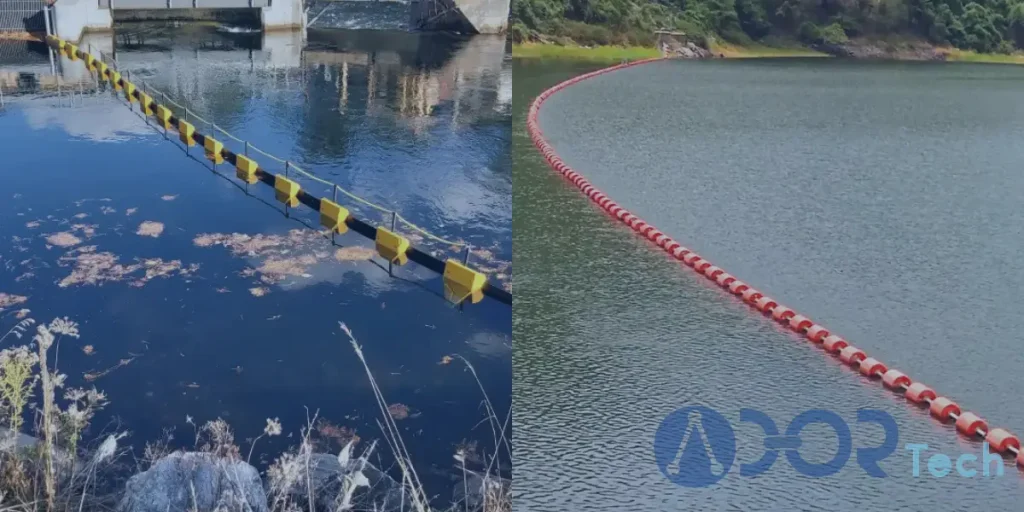
Log booms are generally considered as a type of debris boom. In fact, log booms are debris booms designed to contain the heavy-load debris or floating objects, such as deadhead logs, branches, ice, and so on. With this so, the log booms are engineered differently from the debris control barriers. Fo instance, the material using for floating units should be stronger and more resistant to be capable of containing the logs. Debris barriers are not designed with underneath screens necessarily, but log booms, on the other hand, should be equipped with underneath screens to prevent the logs from passing through. The connection and anchoring systems are also engineered with more strength to make the barrier efficient in containing the heavy load objects.
Conclusion
In summary, log booms are essential for the marina to collect, contain, and prevent the logs and large-scale floating objects from freely moving on the water surface, avoiding the hazards and failures. Formerly, the log booms are created to handle the logs in timber rafting and log transportation processes while today, they are not only upgraded to meet the modern demands of these processes but also used at dams, reservoirs, and other types of waterways to act as a safety barrier along with controlling the movements of floating logs and large-scale objects.
FAQs
Why Do They Keep Logs in the Water?
Logs are kept in water for temporary storage and easier log transportation. Keeping timber wet also helps reduce drying-related cracks and slows some forms of fungal and insect damage before processing.
Are Log Booms Still Used Today?
Yes. Log booms remain in use for timber rafting and storage. Modern log and debris booms also help protect dams, water intakes, and other infrastructures from floating timber.
What Is a Log Boom Made of?
Traditional log booms consist of large floating logs connected with chains. Modern versions may use steel or foam-filled high-density polyethylene (HDPE) floats, steel reinforcement, and heavy-duty connectors.