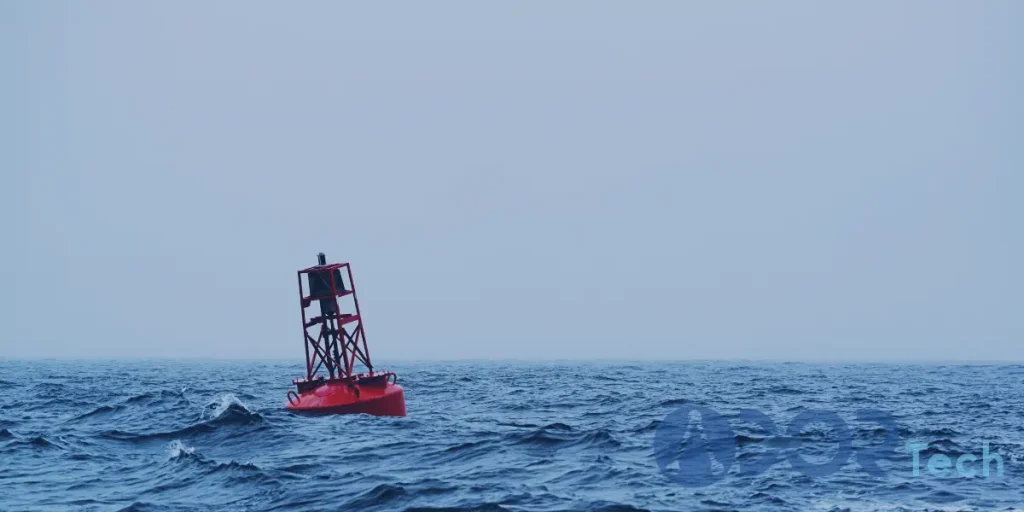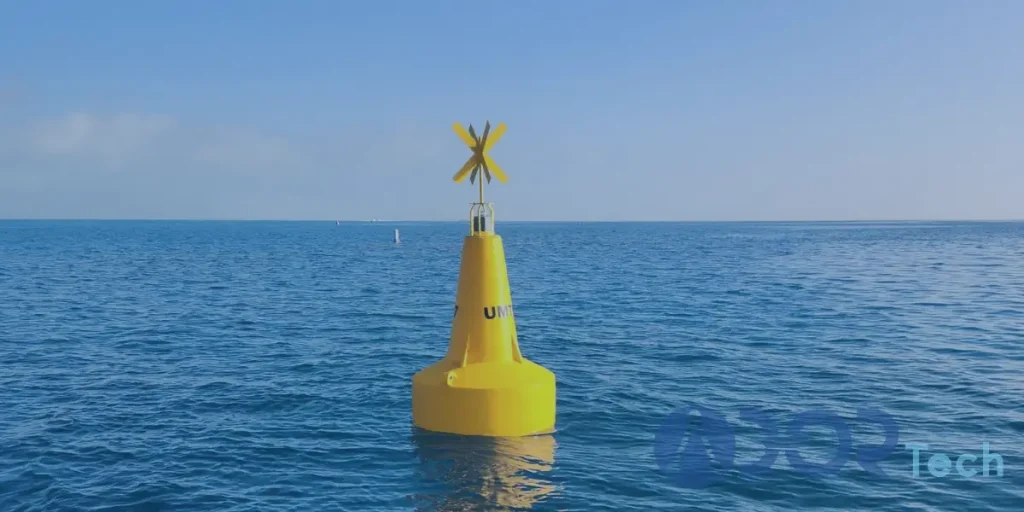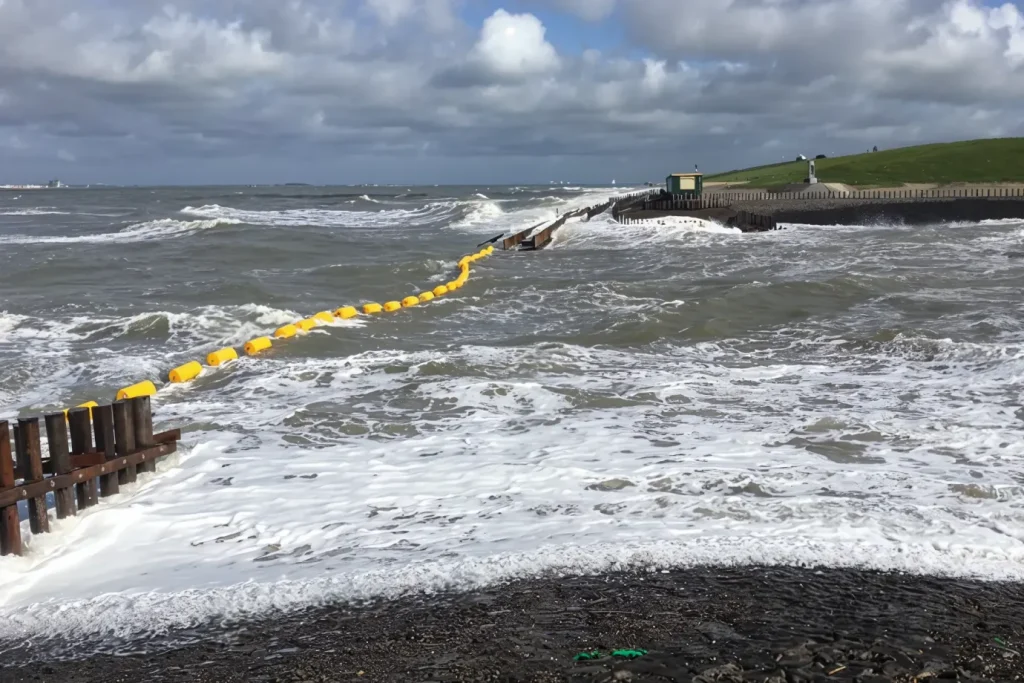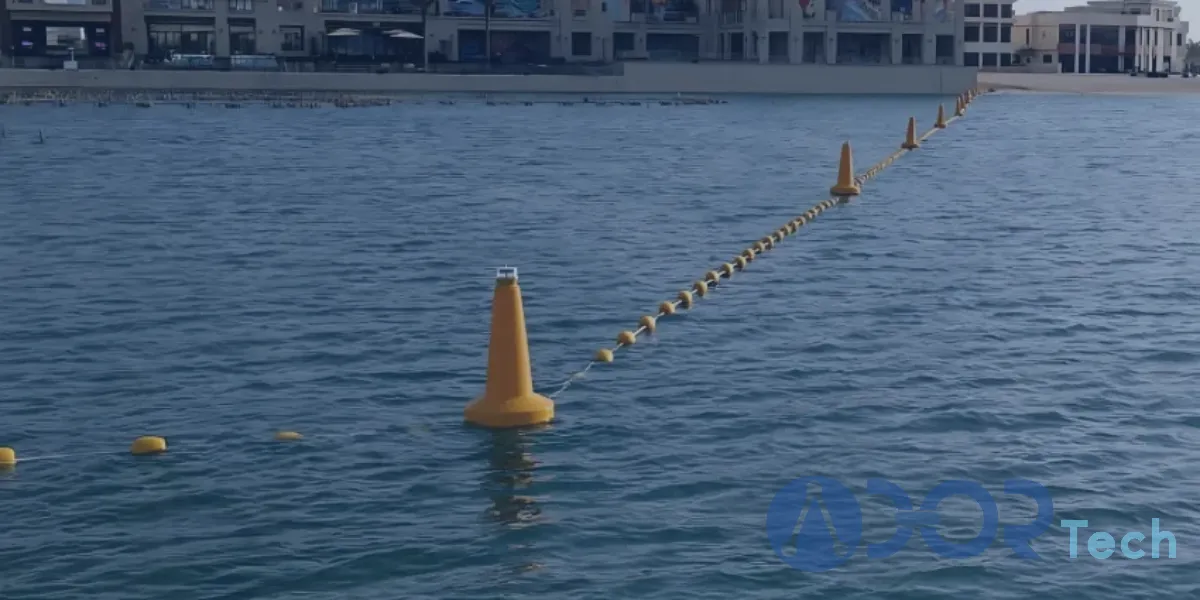
Winter buoy removal in Canada and other North American countries is far more challenging than in other regions due to the extreme winters and freezing conditions. Because of this weather condition, most Canadian projects use all-season buoys that are permanently installed instead of temporary ones, so they still operate even in the winters. However, it is not possible for some projects to install permanent buoys, and the marine buoys have to be removed in winter and reinstalled later. This blog post will provide you with a comprehensive guide on seasonal buoys Canada regulations and considerations for removal or reinstallation.
Can Buoys Stay in the Water in Winter?
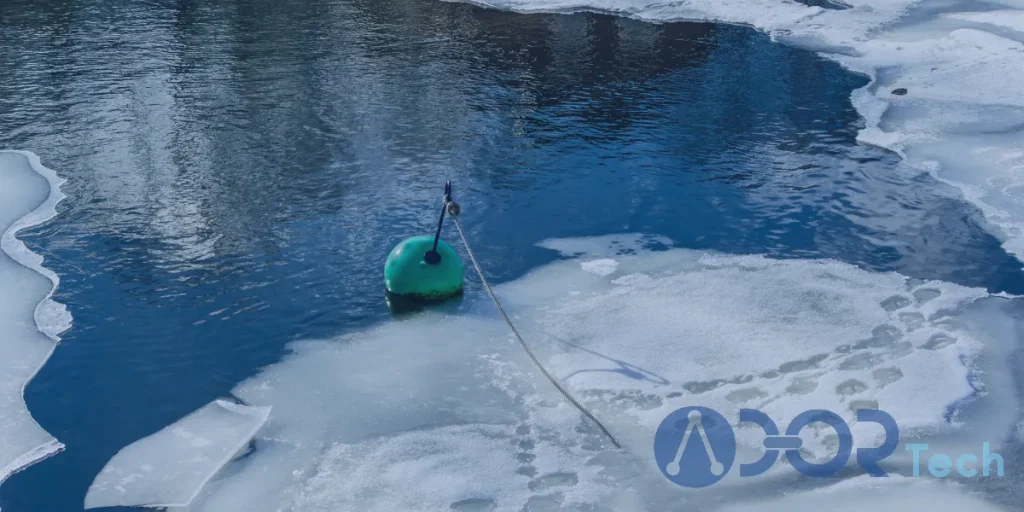
Leaving the buoy on the water or removing it during winter depends on the buoy’s design, site ice conditions, anchoring system, and navigation requirements. Some are specifically designed to withstand freezing conditions and remain operational throughout the year. But drifting or breaking ice is often more dangerous than a stable ice cover because it can push buoys out of position. Moreover, the buoy and its anchoring system must be designed to withstand the anticipated ice loads and resist ice-induced forces. Otherwise, the buoy should be removed and the seasonal buoys Canada adapted design should be installed. Generally, here are the factors that determine whether buoys can stay in the water in winter or not:
- Ice movements
- Buoy displacement
- Buoy’s structural damage
- Mooring and anchoring failures
- Reduced visibility
- Maintenance difficulties
How Ice Affects Floating Booms and Buoys in Canadian Winters
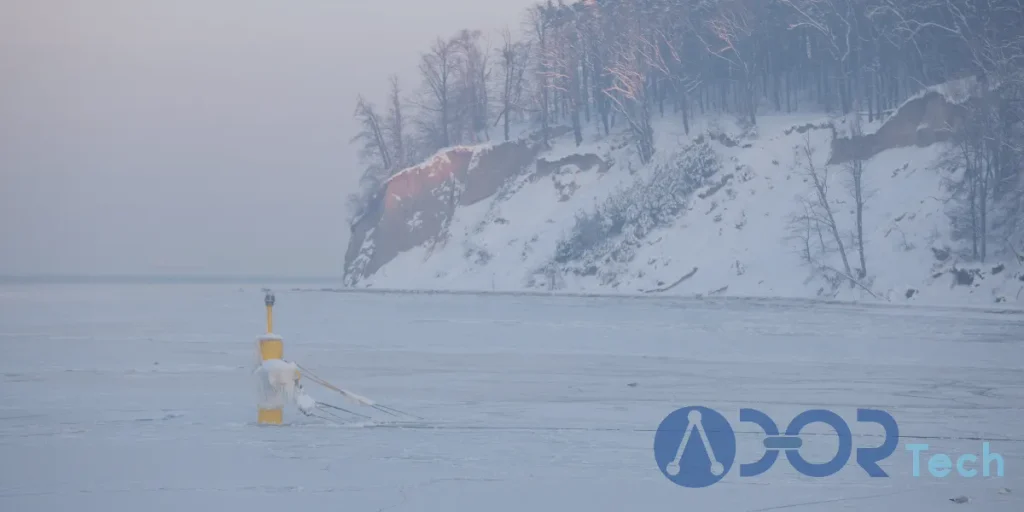
Marine buoys and booms are exposed to severe ice conditions in Canadian winters, which can affect their structural integrity, stability, and functionality. As ice forms, thickens, moves, and eventually breaks apart, it exerts different types of forces on floating structures and their anchoring systems. These forces can damage buoy bodies, deform floating booms, increase mooring tension, and displace anchors. Here are the 3 most common factors that must be considered to avoid operational disruption in navigation and hazardous accidents:
Buoy & Boom Ice Load
Ice load on floating booms and buoys is generally classified into static ice load and dynamic ice load. Static ice load refers to forces exerted by stationary or slowly deforming ice against floating structures. As ice forms around buoys and floating booms, it can restrict their movement. Temperature fluctuations and thermal expansion can generate additional pressure, potentially deforming buoy bodies, damaging boom connections, and increasing tension on mooring systems.
Dynamic buoy and boom ice load, on the other hand, refers to the forces exerted by moving ice sheets and floating ice blocks on floating structures. These movements are often caused by wind, water currents, and changing water levels, particularly during freeze-up and spring break-up. As moving ice collides with floating booms and navigation buoys, it can cause structural damage, buoy displacement, mooring chain failure, and anchor movement.
Ice Thickness
Ice thickness is an important consideration because thicker ice can increase the contact area and potential forces acting on floating structures. However, the actual load also depends on ice strength, temperature, confinement, and structural geometry. Thicker ice can increase the contact area between ice and floating structures, potentially increasing the forces exerted on buoys and floating booms. However, ice thickness alone does not determine the magnitude of ice loads.
Ice Jacking of Anchors and Chains
Ice jacking occurs when ice becomes attached to a submerged or partially submerged object and subsequently applies upward or cyclic forces to it as the ice moves or water levels change. For floating booms and buoys, this can happen when ice freezes around mooring chains, cables, or other exposed components. As the ice rises, shifts, or moves under wind and current forces, it can pull on the mooring system. Repeated loading may gradually disturb an anchor or reduce its holding capacity, particularly in shallow water or where the anchor has limited embedment. Potential consequences include increased chain tension, anchor displacement, damaged connectors, and loss of the buoy’s or boom’s intended position.
Winter Buoy Removal in Canada: A Comprehensive Guide
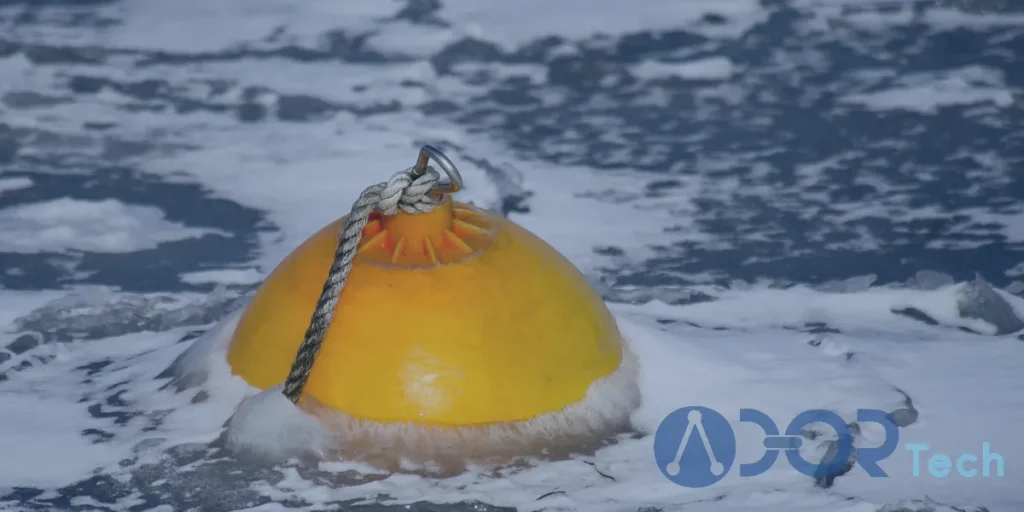
Winter buoy removal is sometimes necessary due to the disruption in marine buoys operation. In Canada, winters involve extremely cold temperatures, heavy snowfall, freezing winds, and prolonged periods of ice formation. This is why most navigation buoys should be removed in winters and replaced with the seasonal buoys Canada adapted designs. In the following, we will learn how to remove a buoy in winter based on the Canadian regulations:
Reviewing Site Conditions
Before removing the installed buoys, site conditions should be reviewed and assessed to determine whether the buoy can be safely removed. Weather conditions should be checked to see how wind, wave height, visibility, and water temperature are. Actual water depth and the possible water fluctuations should also be measured. Ice conditions, on the other hand, should be assessed, so the buoys can be removed before significant ice formation makes vessel access or lifting unsafe. The buoy dimensions and weight should also be calculated before removal to understand the expected lifting load, including mooring components, accumulated ice, and trapped water. Moreover, the type of anchoring system that the buoy uses is critical.
Verifying Authorization & Navigation Requirements
Buoys play a crucial role in safe navigation and removing them without authorization may cause hazardous accidents. If removing a buoy changes the marking of an active navigable channel, removal should be coordinated with Canadian Coast Guard Marine Communications and Traffic Services (MCTS) to determine the necessary navigational warning arrangements.
Removal Preparation
Based on the site and buoy characteristics, suitable removal equipment is chosen. Generally, a workboat with a lifting crane or winch is required to lift the buoy and move it to the storage area. Shackles, hooks, and other lifting accessories are also required depending on the anchoring type and buoy characteristics. To safely remove the buoy, it is critical to consider appropriate cold-water personal protective equipment, such as life jackets or flotation suits.
Winter Buoy Removal
Position the workboat or vessel safely near the buoy. It is recommended to anchor the vessel to control its movements during removal. Lift the buoy from its lifting points using the appropriate equipment and place it in a secure position on the workboat. It should be considered to avoid lifting the entire buoy-and-anchor assembly through a lifting point that is not rated for that load. After the buoy is lifted, the anchoring system must be handled appropriately. If the anchor is left underwater, ensure the remaining components are secured and do not create a navigation hazard.
Inspecting, Maintaining & Storing the Buoy
Once the buoy is transported to shore, prepare it for winter storage. Before storing, it is crucial to inspect and maintain the buoy to ensure it is capable of operating safely later. The main maintenance activities include cleaning the buoy body, checking for structural damage, inspecting the lifting eyes, repairing reflective markings, and servicing the marine lantern. The buoy’s solar-powered marine lanterns should also be inspected for battery storage, charging, and disconnection.
Reinstalling Seasonal Buoys Canada Regulations
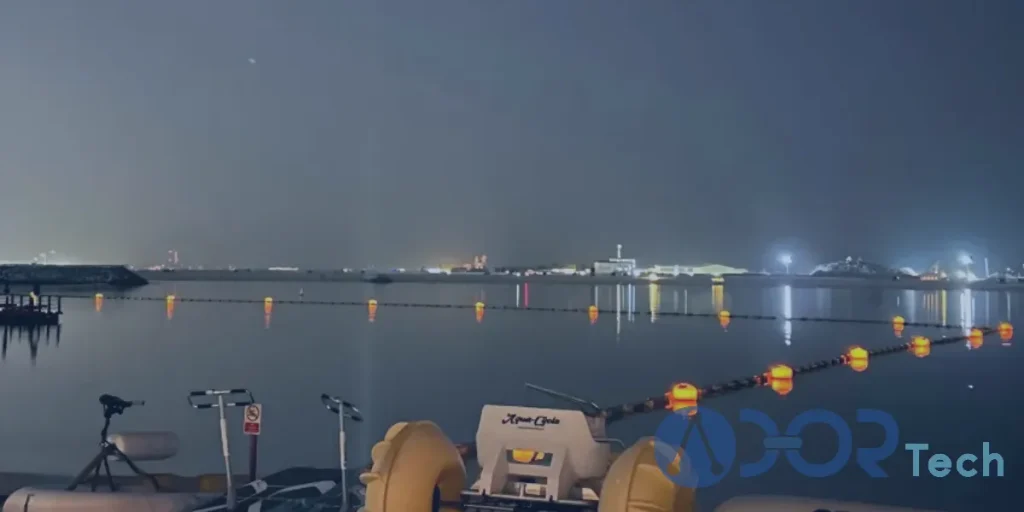
In Canada, seasonal navigation buoys are typically reinstalled in spring when ice conditions improve and waterways become accessible for navigation. Reinstalling seasonal buoys must comply with applicable Canadian navigation regulations and standards to ensure the safety of vessels operating in the waterway. Reinstalling seasonal buoys Canada regulations include several requirements that must be considered:
- Buoys must be installed in their designated locations without obstructing or misleading vessel navigation.
- Buoy colors, shapes, identification markings, and navigation lights must comply with applicable Canadian standards.
- Mooring systems, chains, and anchors must be inspected to ensure stability and reliable operation.
- Reinstallation affecting published navigation aids may require coordination with the Canadian Coast Guard and appropriate NAVWARN updates.
Winterizing Safety Booms and Buoys for Permanent Deployment
In Canada, some floating safety booms and navigation buoys must remain in the water throughout winter and cannot be removed to maintain safety, protect infrastructure, or support navigation. However, permanent deployment in freezing conditions requires proper winterization to prevent damage caused by ice formation, moving ice, low temperatures, and fluctuating water levels.
Winterizing safety booms and buoys involves preparing their structures, anchoring systems, and associated equipment to withstand winter conditions without seasonal removal. Using ice-resistant materials, reinforcing anchoring systems, applying proper design, and regular maintenance commonly make the buoys, safety booms, and debris booms ready for permanent installation.
Conclusion
In conclusion, winter buoy removal in Canada is essential for protecting navigation buoys and floating safety booms from harsh winter conditions, including ice formation, static and dynamic ice loads, and ice jacking. While many seasonal buoys are removed before freeze-up and reinstalled in spring, specialized ice-resistant buoys and booms can remain deployed year-round. Proper winterization, anchoring, maintenance, and compliance with Canadian navigation regulations are crucial for ensuring equipment durability and safe navigation.
FAQs
Is Winter Buoy Removal Mandatory in Canada?
No. There is no universal federal rule requiring all buoys to be removed during winter. The need for removal depends on ice conditions, navigation requirements, the type of buoy, and applicable operating obligations.
What Replaces Removed Navigation Buoys During Winter?
IsWinter spar buoys are commonly used in Canadian waterways where navigation continues. Some locations also use specially designed four-season buoys.
Can Removed Buoys Be Reinstalled?
Yes, buoys removed for winter can be reinstalled in spring once ice conditions improve and waterways become safe for deployment. Before reinstallation, the buoy body, anchoring system, mooring chains, and marine lanterns should be inspected, maintained, and repaired if necessary.