Oil containment is not a challenge anymore! At ADOR Tech, we provide a wide range of solutions for your oil containment challenges.
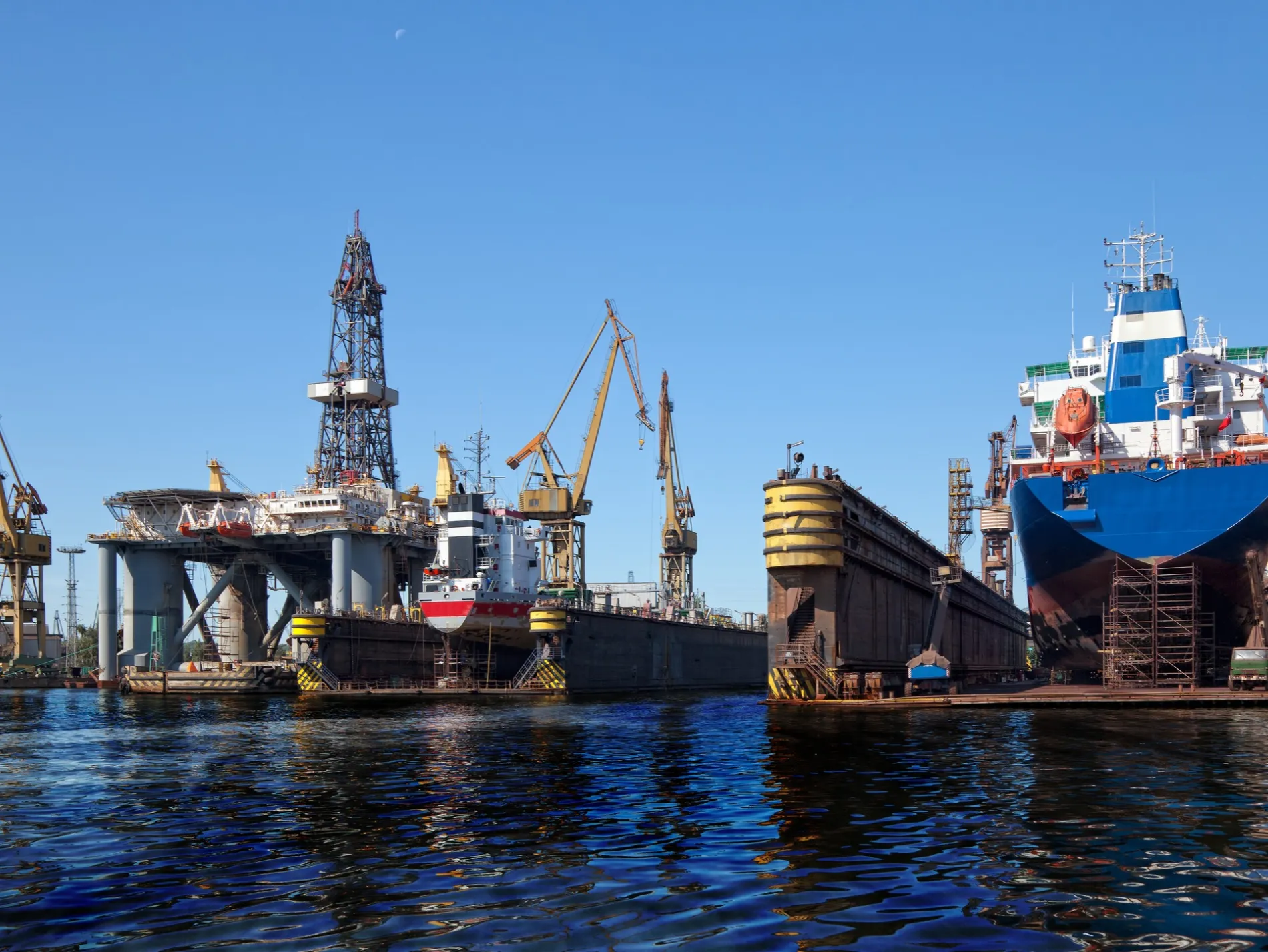
Oil containment refers to controlling spilled oil and preventing it from spreading across water. Oil spills not only harm ecosystems and aquatic habitats but also pollute beaches and even drinking-water sources. Moreover, it can disrupt ports, shipping routes, fisheries, and coastal industries. Oil spills also may cause fire and put the workplace-safety in danger. These long-term environmental and hazardous consequences make oil containment more critical than ever.
Here at ADOR Tech, we offer the best suit oil containment systems, each as a solution for challenges you have faced in your projects.
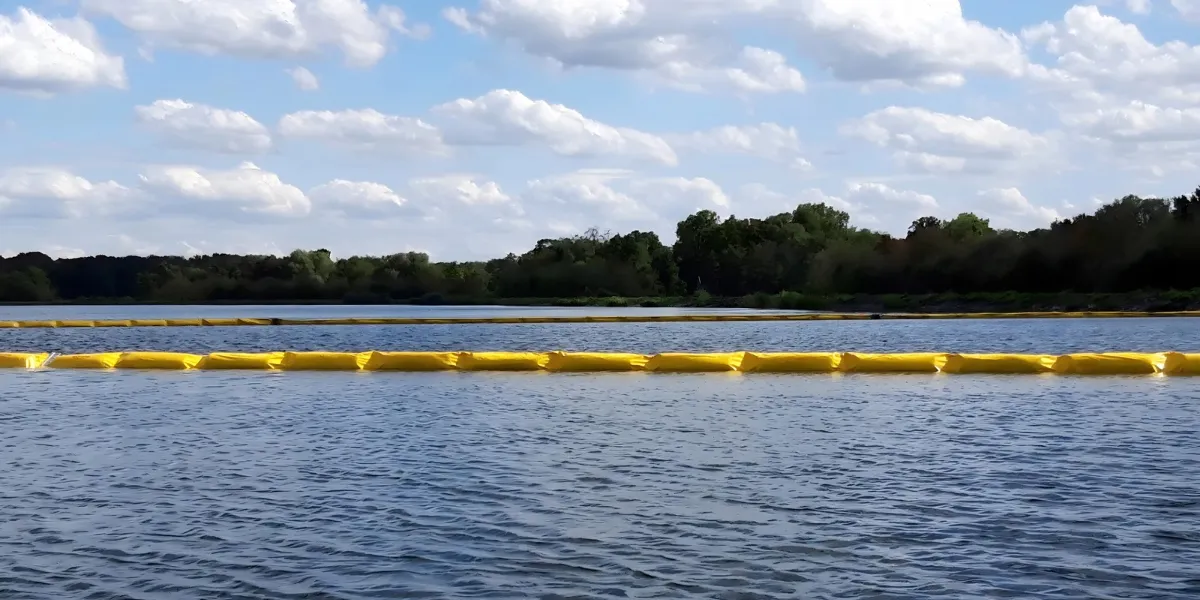
Oil containment boom is a floating barrier deployed on the water surface to contain the spilled oil and prevent it from spreading out. This barrier is provided in two models: Solid Floating Oil Boom for heavy-duty oil spills and Fence Oil Boom for short-duration containments.
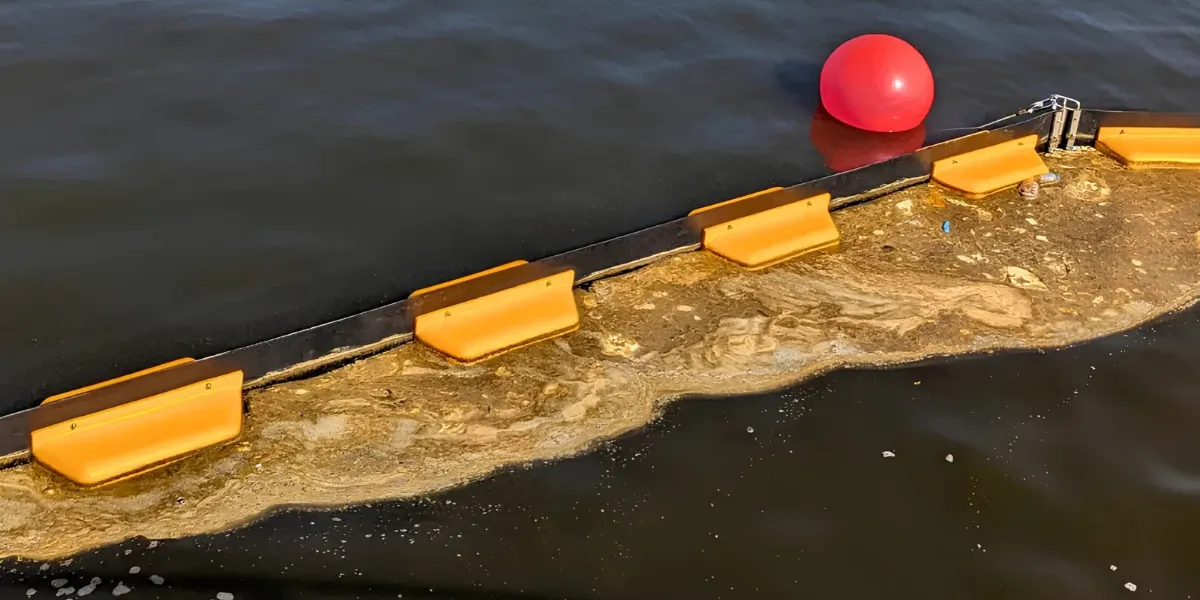
Permanent oil boom is a robust barrier engineered with vertical PVC sheet with half float units on it, deploying on the water to contain spilled oil for long-term operations. This solution best fits the projects where permanent heavy-duty oil containment is a critical challenge.
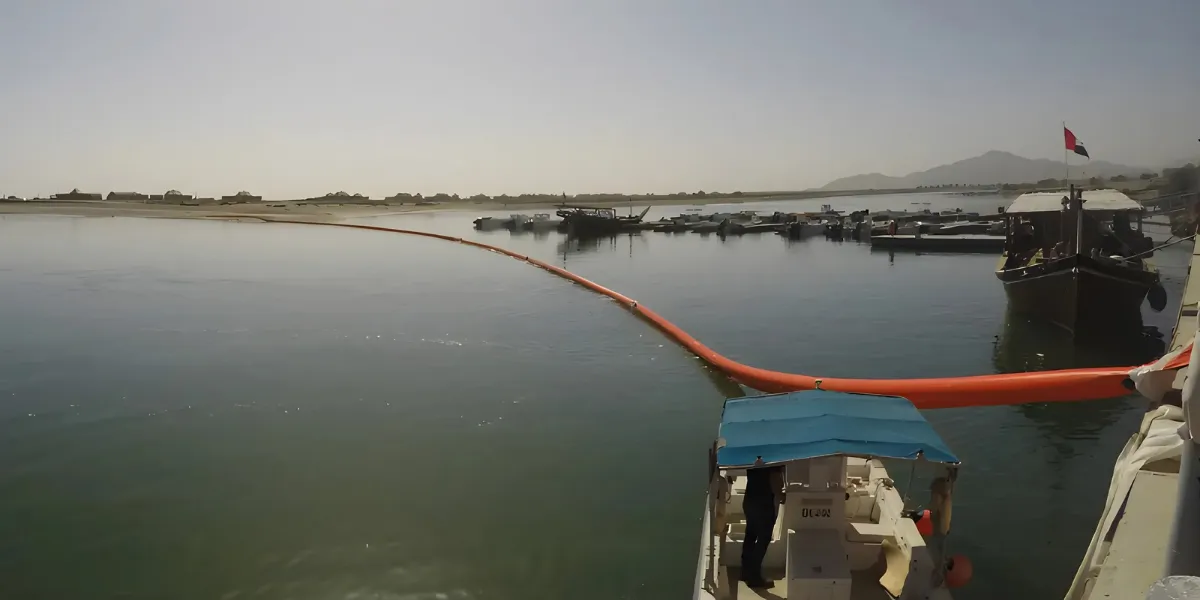
Inflatable oil boom is a barrier rapidly air-inflated and deployed on the water surface in oil spill situations and stored on a boom reel when it is not needed. These spill containment products are ideal for oil containment and control situations where both rapid deployment and emergency response are priorities.
Which Solution Fits Your Challenge? |
Solid Floating Oil Boom | Fence Oil Boom | Permanent Oil Boom | Inflatable Oil Boom |
|---|---|---|---|---|
| Rapid Spreading of Oil | No | No | No | Yes |
| Coastal Oil Containment | No | Yes | No | No |
| Strong Currents & Tides | Yes | No | Yes | No |
| Strong Winds & Changing Weather | Yes | No | Yes | No |
| Changing Oil Viscosity & Behavior | No | No | Yes | No |
| Emergency Response | No | No | No | Yes |
| Permanent Deployment | No | No | Yes | No |
| Short-Term Deployment | No | Yes | No | Yes |
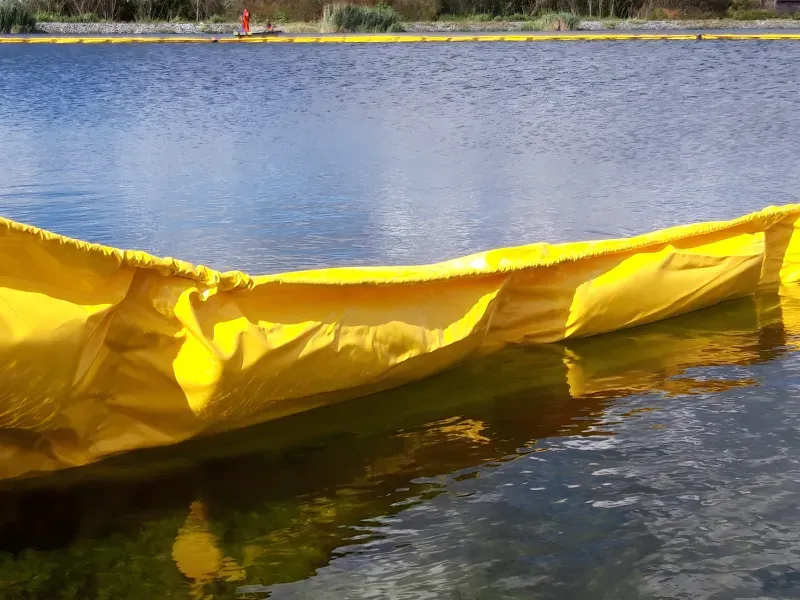
Solid Flotation Oil Boom helped water-link protect its drinking water intake from seasonal blue-green algae. Installed by our partner, Ecocoast, the solution kept filtration running smoothly and ensured uninterrupted water supply throughout the summer.
Share the key project details with our team to prepare a suitable oil containment solution.
Oil containment is the process of controlling oil spills by containing it using floating barriers, but oil absorbent refers to absorbing the spilled oil using related tools.
Spreading oil can contaminate additional shorelines, habitats, and infrastructure. Oil containment systems help limit this exposure and concentrate oil for recovery.
No. Stopping a leak controls the source; containment manages oil that has already escaped.
Yes. Contained oil can still harm organisms and contaminate surfaces within the affected area. Containment does not make oil harmless.
No. Its effectiveness depends on oil properties, environmental conditions, and how quickly the spill spreads.
No. Spill prevention reduces the likelihood of a release while oil containment limits the spread when a release occurs.
Oil containment has always been a challenging concern in marine projects, such as ports, harbours, terminals, shipyards, etc. spilled oil moves and changes while the response is underway. It can spread across the water, separate into patches, and reach shorelines before oil containment is established. A continuing leak adds more oil, increasing the area and volume that responders must manage. Oil containment, on the other hand, has physical limits. Strong currents can carry oil beneath floating barriers, while waves can wash it over the top. Therefore, effective oil containment depends on response speed, site access, and changing water conditions.
Different types of oils behave differently after a spill. Low-viscosity oils flow readily and escape beneath barriers more easily in moving water. More viscous oils can accumulate in thicker layers, but they may be harder to handle during recovery. Oil behavior also changes in different weather conditions. Lighter components evaporate, while some oils mix with water to form persistent emulsions. Heavy fuel oils can remain floating or stranded for extended periods, whereas a small diesel spill may evaporate and disperse much faster. These differences affect the available response time and the difficulty of managing the spill.
Currents transport spilled oil and help it to spread faster. Winds influence the direction and movement of surface slicks. Near the coast, tidal currents can change direction, moving oil into different areas as the tide turns. This makes the spill’s location a moving target that requires updated observations and forecasts.
Waves can break oil into droplets and mix them into the upper water column, making that oil less accessible to surface containment. Weather also changes the oil itself through processes such as evaporation and emulsification. A smaller visible slick does not necessarily mean all the oil has been removed; some may have dispersed below the surface.