

Fence boom and curtain boom are two of the environmental barriers used to protect waterways and marinas. Although the purpose of both of these barriers is environmental protection, they serve as totally different products based on their structural design and application. This blog post will define fence boom and curtain boom in detail to clarify what each of them actually is. Then, we will proceed with the main applications of each to understand where they can be most efficient. We will also compare them comprehensively afterward to reveal how they differ based on the main features. So, let’s go through it.
What Is a Fence Boom?
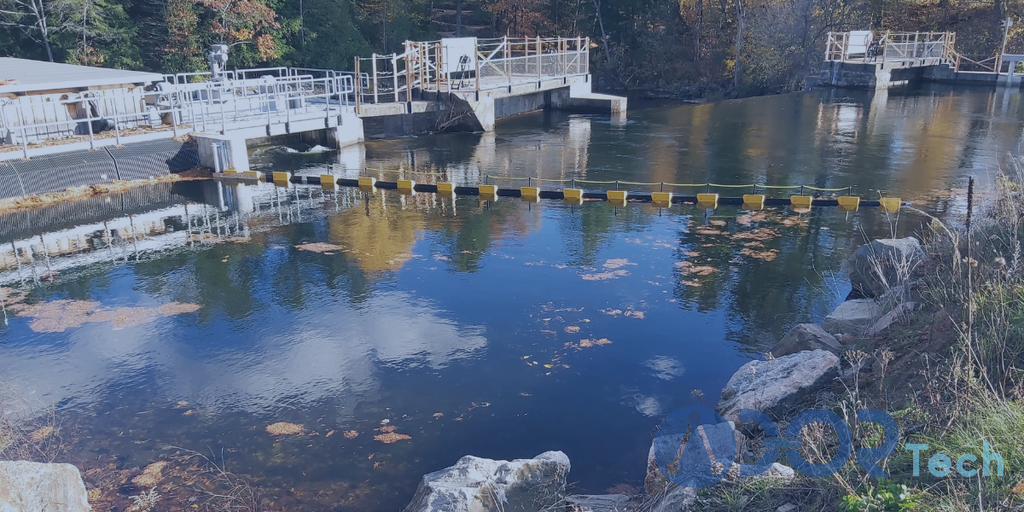
Fence boom is a type of environmental barrier designed with floating units and a vertical fence, net, or mesh on top to contain both floating debris on the water and the lightweight debris moved by wind through its fence. In other words, the main role of fence booms is to protect the water environment, especially in areas where wind or high currents and waves create the demand for heightened protection. However, fencing boom can be designed differently based on its application. For example, an oil fence boom is designed with flat floating units or panels deployed on the water vertically to contain spilled oil.
Where Is a Fence Boom Commonly Used?
Fence boom is a primary type of barrier used for environmental protection. One of the main applications of fence booms is to contain floating debris, trash, vegetation, and other surface pollutants. Therefore, fencing boom is commonly installed wherever debris control is required, including coastal waters, rivers, waterways, water intakes, dams, industrial facilities, etc.
Fence booms can also be used for oil containment in projects where oil spill is a challenge. In this regard, they can be deployed in ports, harbours, oil terminals, refineries, industrial waterways, and so on to contain oil on the water surface and prevent it from spreading.
What Is a Curtain Boom?

Curtain boom refers to an environmental barrier consisting of floating units and a flexible curtain that extends vertically below the water surface. This barrier is mainly deployed to contain, control, and manage different types of pollutants depending on its design and materials. For instance, the PVC skirt in a sea curtain boom is used to control oil spills, while special fabrics are used for sediment control.
Where Is a Curtain Boom Commonly Used?
Curtain boom is designed to not only manage floating pollutants but also prevent them from escaping from underneath the barrier. So, it is commonly suited for containing pollutants that tend to float or move under the water surface, like some types of oil, sediment, turbidity silt, and foam. Therefore, curtain booms are typically installed in projects where sediment control or oil containment is required, including marine construction, dredging, ports, shipyards, industrial facilities, etc.
Fence Boom vs Curtain Boom: 3 Key Differences
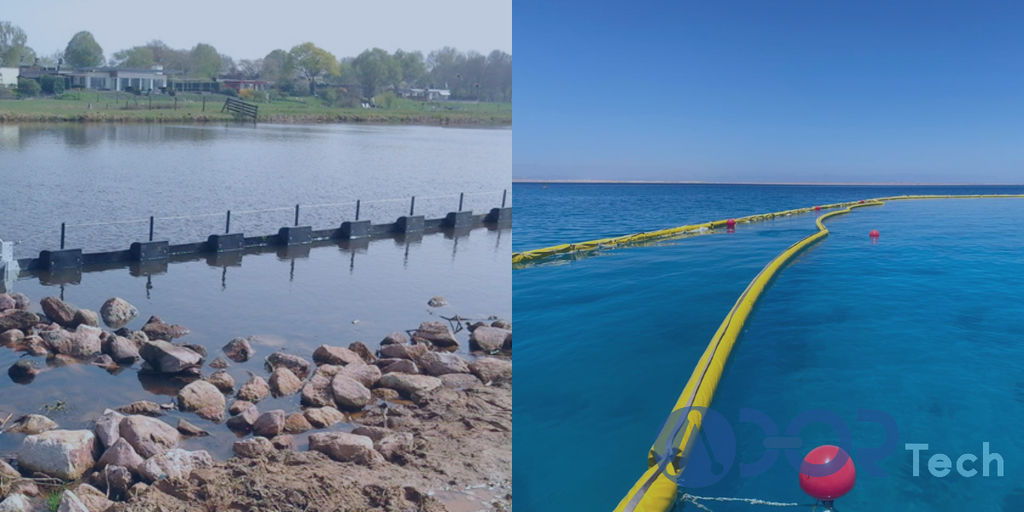
Fence boom and curtain boom are the most common types of environmental barriers used to control and manage different types of pollutants to protect marinas. However, they are significantly different in structural design, application, and operational conditions. Here are the three key differences between fence boom and curtain boom that can help you choose the one that best suits your project’s demands:
Structural Design
Fence boom involves floating units that keep the barrier buoyant on the water surface and a boom fence, mesh, or net on top to catch the debris that is moved by high currents, wind, or storm. Curtain booms, on the other hand, consist of floating units just like a fencing boom, but the main difference is that the curtain booms have a skirt or curtain underneath that extends vertically into the water to contain the pollutants that have less tendency to be buoyant. This is the main structural and design difference between these two barriers, and the shape of the floating units, connection types, and anchoring systems can vary based on the project’s requirements and manufacturer designs.
Applications & Use Cases
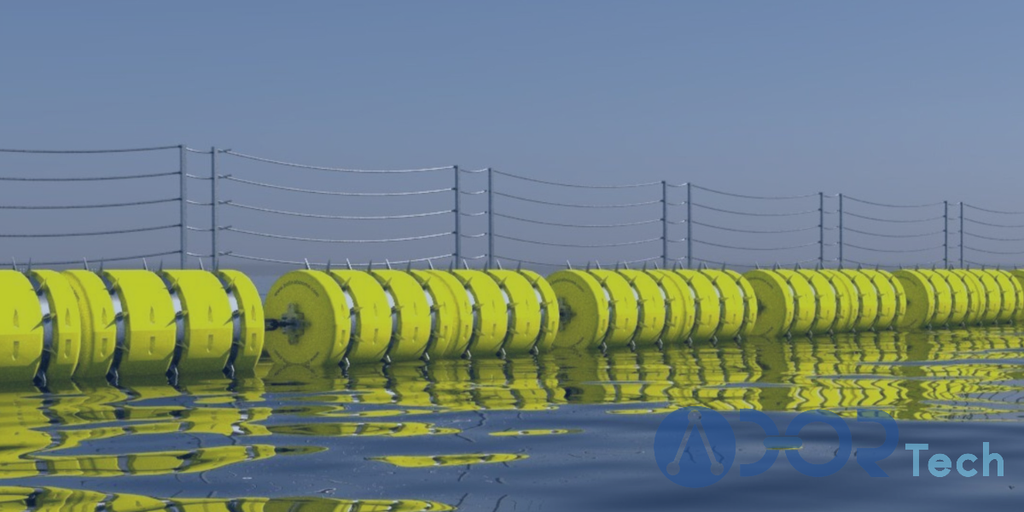
Fencing boom is often used to contain floating debris and trash in waterways, rivers, natural reservoirs, dams, marine infrastructures, and shorelines, while curtain boom is mainly used for sediment and oil spill control in ports, shipyards, industrial facilities, terminals, marine constructions, dredging, demolition, and rehabilitation. Fence boom is also efficient at containing large-scale debris, such as logs and timbers, while curtain booms are usually suited to manage pollutants with smaller particles, such as sediment, silt, turbidity, foam, and oil.
Moreover, fence boom can also be used as a security barrier in projects where unauthorized vessels are not allowed to pass. In these cases, security booms are equipped with a fence on top of the floating units to not only prevent the vessels from passing through but also stop them from passing over the floating barrier.
However, fence boom and curtain boom are both used to control oil spills, but with a critical difference: oil fence boom refers to a barrier with flat floating panels deployed in the water vertically, creating a fence-like boundary to contain the spilled oil on the water surface, while the oil containment boom that has a curtain underneath is used to manage heavy-duty oil spills where a protection skirt is required to contain oil under the water surface.
Operational Conditions
Fence boom is best suited for environmental conditions where wind and storm move lightweight debris and trash. The boom fence catches the debris that moves by wind and prevents it from spreading out. Curtain booms, on the other hand, are ideal for waters with low to high currents and wave range depending on the materials used, but they cannot contain the debris that is moved by wind or storm because they have no fence on top. The fencing boom is also not capable of operating in high-current waters because the fence does not allow for the required stability.
Conclusion
Fence boom and curtain boom are the primary types of environmental barrier used to protect marinas. Their different structural design, however, allows for different applications. Fencing boom is mostly suited for projects where a floating barrier alone is not enough and a fence is required as additional protection, while curtain booms are often used in projects where an underneath curtain or skirt is required to contain the pollutants that have less buoyancy. Both of these barriers are provided in different designs and features, so they can operate differently based on the manufacturer’s purpose.
FAQs
What Types of Debris Can a Fence Boom Contain?
It widely depends on the fencing boom design, but it is mostly used for controlling and containing the floating debris and trash that are moved by wind, or large-scale ones like logs and timbers.
Are Oil Fence Boom and Fencing Boom the Same?
No. The design of an oil fence boom and a fence boom is totally different. The fencing boom has a fence on top of the floating units, while an oil fence boom is a type of oil containment boom that is deployed vertically on the water like a fence.
Can Fence Booms Be Used in High-Current Waters?
It can vary depending on the design and materials used in the fence boom. Typically, they are not suitable for high-current waters because of less stability, but if it is designed appropriately, it is possible.


